 Andorra
 Austria
 Belgium
 Bosnia and Herzegovina
 Bulgaria
 Cyprus
 Czech Republic
 Denmark
 Deutschland
 France
 Greece
 Hungary
 Ireland
 Iceland
 Israel
 Italy
Italy
 Latvia
 Luxembourg
 Malta
Malta
 Montenegro
 Netherlands
 Norway
 Poland
 Portugal
 Romania
 Serbia
 Slovakia
 Slovenia
 Spain
Spain
 Sweden
 Switzerland
 Turkey
 Ukraine
 United Kingdom
 Argentina
 Bolivia
 Brasil
 Canada
 Chile
Chile
 Colombia
 Costa Rica
 Cuba
Cuba
 República Dominicana
 Ecuador
 El Salvador
 French Guiana
 Guatemala
 Honduras
 México
 Nicaragua
 Panamá
 Paraguay
 Perú
Perú
 Uruguay
 United States
 Venezuela
 Azerbaijan
 China
China
 Hong Kong
 India
India
 Indonesia
 Iraq
Iraq
 Japan
Japan
 Jordan
 Kuwait
 Lebanon
 Malaysia
 Maurice
 Myanmar
 Oman
Oman
 Pakistan
 Philippines
 Qatar
Qatar
 Russia
 Saudi Arabia
 Singapore
 South Korea
 Syria
Syria
 Thailand
 United Arab Emirates
 Vietnam
 Algeria
 Angola
 Egypt
Egypt
 Ghana
Ghana
 Kenya
Kenya
 Libya
Libya
 Morocco
 Nigeria
 Sénégal
 South Africa
 Tanzania
 Tunisie
 Australia
 New Zealand

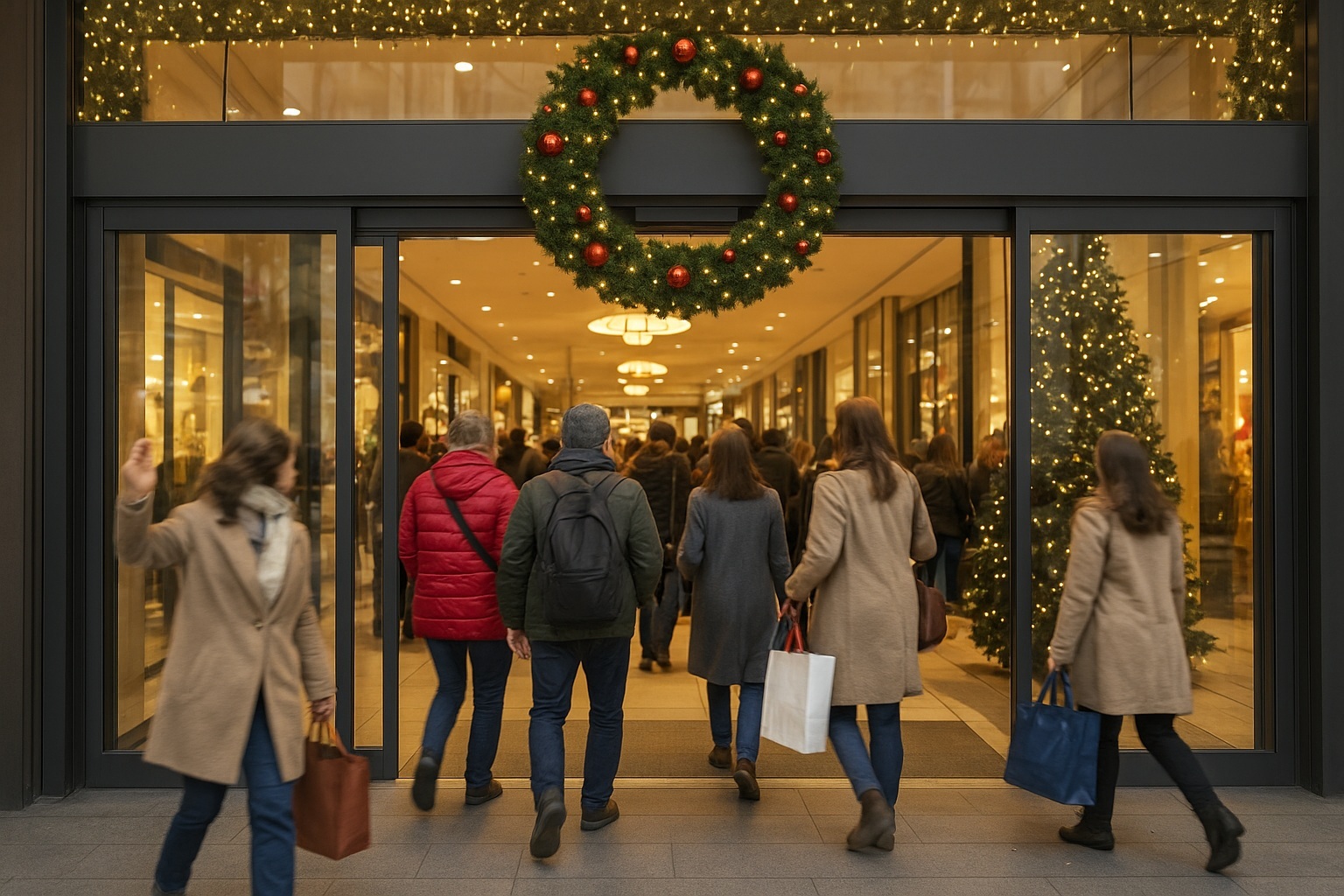
This combination turns access points into a critical element for ensuring efficiency, safety, and a smooth experience. In this context, automatic and industrial doors have become an essential solution for multiple sectors, offering comfort, access control, energy efficiency, operational performance, and hygiene.
Below, we analyze their impact across key sectors during periods of heightened footfall.
Retail: Smooth Access and Increased Sales
During the "golden quarter," when shops and shopping centers experience the highest visitor concentration of the year, automatic doors play a decisive role:
- They facilitate barrier-free entry, reducing queues and crowding, especially on high-traffic days.
- They enhance the customer experience by offering a comfortable, stylish, and efficient access point that invites people in.
- They help save energy by preventing temperature loss in climate-controlled spaces through intelligent opening systems.
- They convey modernity and professionalism, aligning with the image of premium brands.
- They improve universal accessibility—especially relevant when the number of families, elderly visitors, and people with reduced mobility increases.
In retail, every point of friction at the entrance can translate into lost sales opportunities; therefore, optimizing entry points becomes a strategic investment during this season.
Hospitality (Horeca): Comfort, Hygiene, and a Constant Flow of Guests
Restaurants, hotels, cafés, and gastronomic spaces also see rising visitor numbers at this time of year, especially due to corporate events, holiday dinners, and tourism.
Automatic doors provide key benefits:
- Improved hygiene and reduced physical contact, especially in access points to dining rooms, restrooms, or common areas.
- Better climate control, essential for ensuring guest comfort in enclosed terraces, main entrances, or buffet areas.
- More efficient traffic flow, allowing staff and guests to move without interruptions.
- Efficient staff access, optimizing service times through automated swing or sliding doors.
In the hospitality sector—where customer experience is paramount—automatic doors contribute to the perception of quality and attention to detail.
Industry and Logistics: Performance and Safety During Peak Activity
During the final months of the year, many industries increase production and logistics operations to meet commercial campaigns and delivery deadlines.
In these environments, automatic doors offer:
- Speed and efficiency, enabling vehicles and workers to move without delays.
- Reduced energy loss in cold rooms, warehouses, or climate-controlled areas.
- Enhanced safety thanks to advanced sensors and controlled opening systems.
- Optimized goods flow, avoiding bottlenecks and downtime.
- Hygiene and environmental control, especially in food or pharmaceutical sectors.
High-speed or folding doors become critical tools for maintaining productivity during periods of maximum operational demand.
A Common Element: Managing High Flows of People and Goods
Across all these sectors, the primary need during this time of year is the same: managing large flows of people and goods safely, efficiently, and without compromising the user experience. Automatic and industrial doors stand out as a strategic element because they:
- Reduce waiting times.
- Prevent overcrowding.
- Improve safety and access control.
- Maintain indoor comfort in climate-controlled areas.
- Strengthen the establishment’s image.
- Increase universal accessibility.
- Support high standards of hygiene.
If this summer you want to improve the comfort of your premises or office, save energy and offer a better experience to your customers, find out how we can help you with the most suitable solution.
Contact us