Andorra
 Austria
 Belgium
 Bosnia and Herzegovina
 Bulgaria
 Cyprus
 Czech Republic
 Denmark
 Deutschland
 France
 Greece
 Hungary
 Ireland
 Iceland
 Israel
 Italy
Italy
 Latvia
 Luxembourg
 Malta
Malta
 Montenegro
 Netherlands
 Norway
 Poland
 Portugal
 Romania
 Serbia
 Slovakia
 Slovenia
 Spain
Spain
 Sweden
 Switzerland
 Turkey
 Ukraine
 United Kingdom
 Argentina
 Bolivia
 Brasil
 Canada
 Chile
Chile
 Colombia
 Costa Rica
 Cuba
Cuba
 República Dominicana
 Ecuador
 El Salvador
 French Guiana
 Guatemala
 Honduras
 México
 Nicaragua
 Panamá
 Paraguay
 Perú
Perú
 Uruguay
 United States
 Venezuela
 Azerbaijan
 China
China
 Hong Kong
 India
India
 Indonesia
 Iraq
Iraq
 Japan
Japan
 Jordan
 Kuwait
 Lebanon
 Malaysia
 Maurice
 Myanmar
 Oman
Oman
 Pakistan
 Philippines
 Qatar
Qatar
 Russia
 Saudi Arabia
 Singapore
 South Korea
 Syria
Syria
 Thailand
 United Arab Emirates
 Vietnam
 Algeria
 Angola
 Egypt
Egypt
 Ghana
Ghana
 Kenya
Kenya
 Libya
Libya
 Morocco
 Nigeria
 Sénégal
 South Africa
 Tanzania
 Tunisie
 Australia
 New Zealand

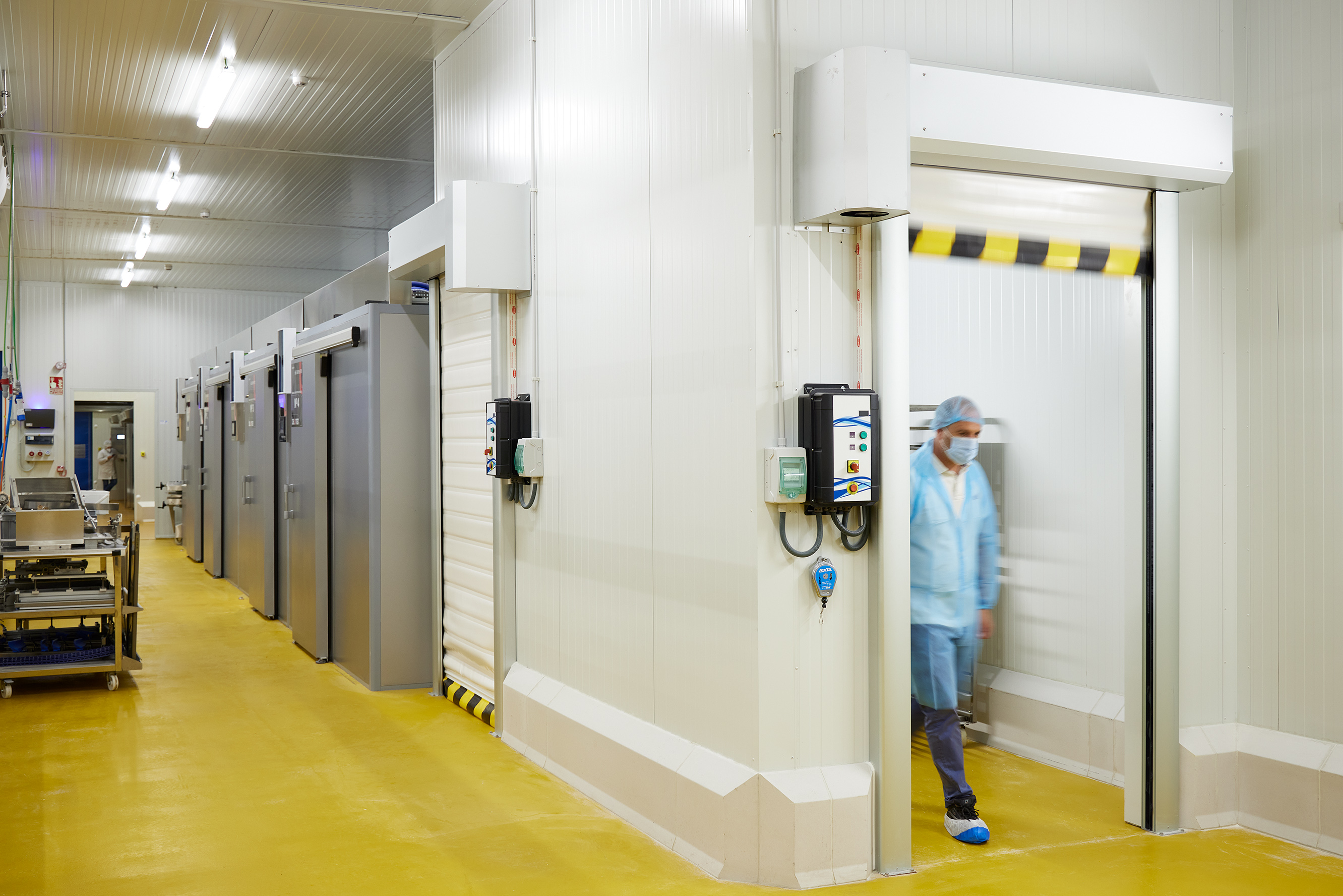
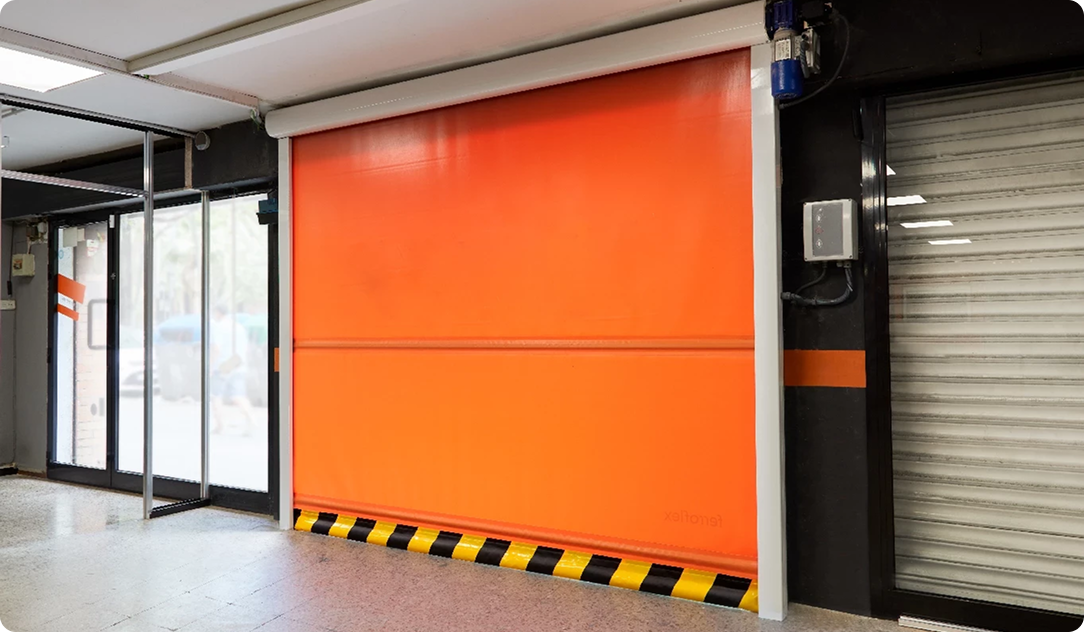
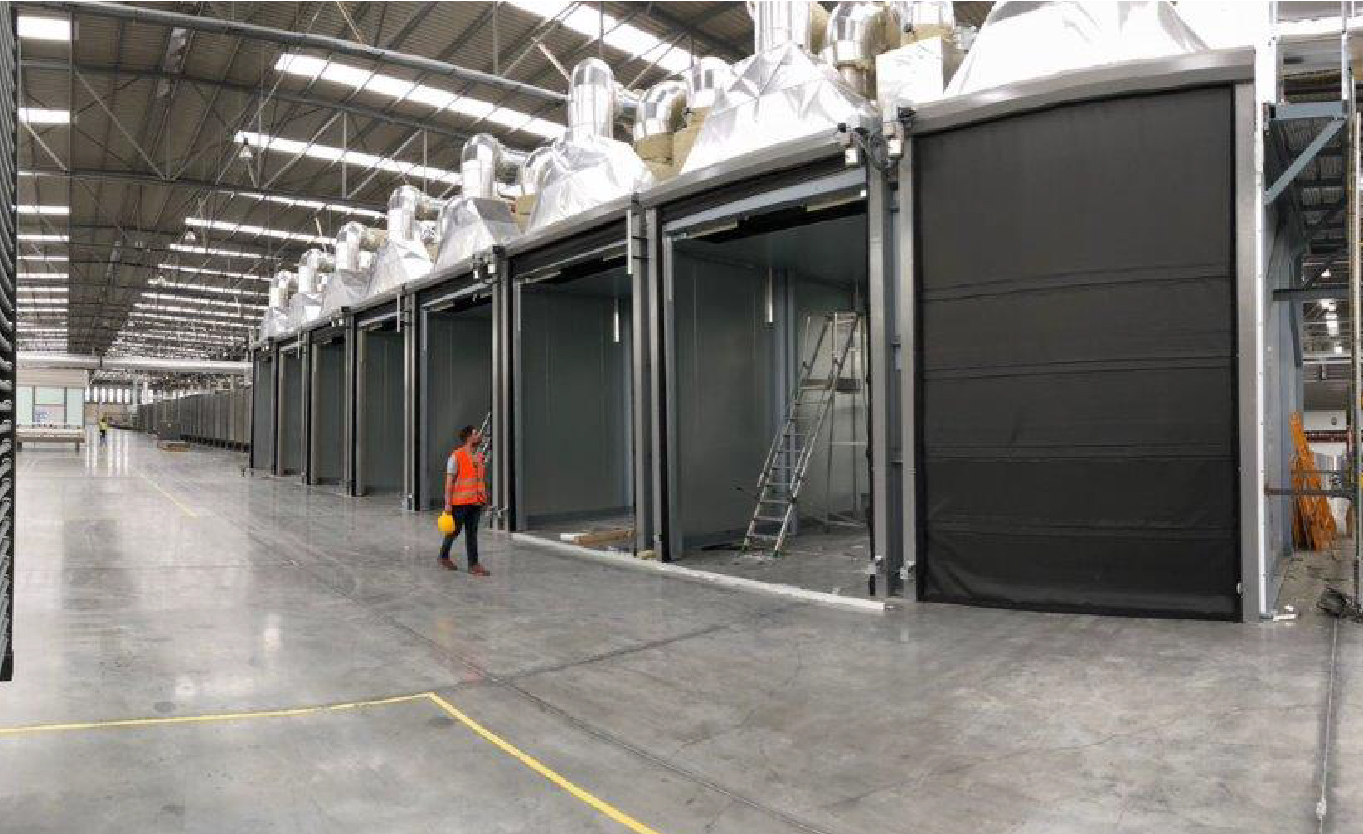
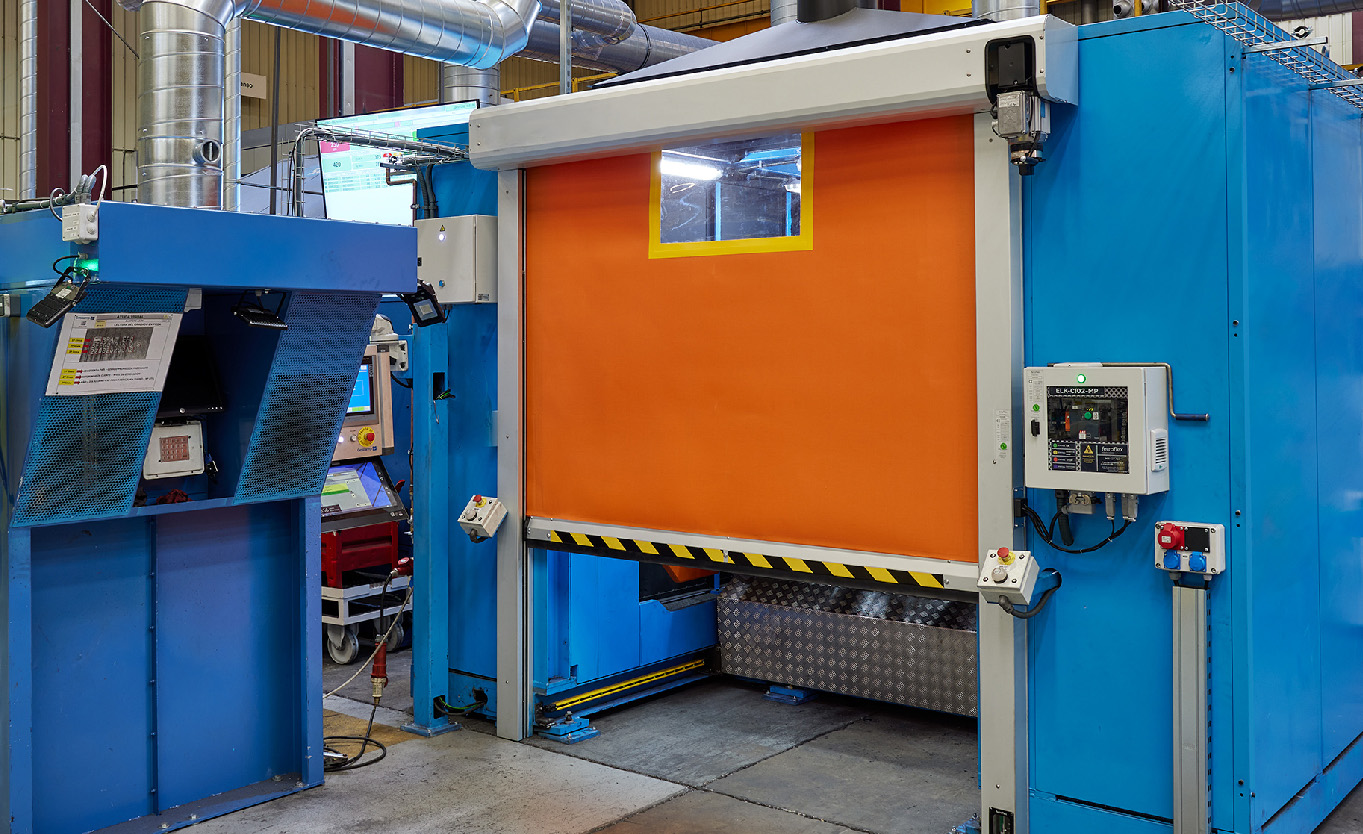
High-speed roll-up doors are designed to separate areas and manage frequent movement of people, vehicles or goods in industrial settings. Their vertical opening mechanism and rapid operation allow the passage to be kept clear when necessary and the space to be re-divided in a short space of time.
This feature is particularly useful in facilities with continuous and intensive traffic, ranging from industrial warehouses and logistics centres to production lines, cold stores, laboratories or cleanrooms.
However, not all high-speed roll-up doors are suitable for the same conditions. The level of traffic, the dimensions of the opening space, the temperature, whether the door is located indoors or outdoors, the requirements for airtightness and integration with other systems all determine which configuration is most appropriate.
A high-speed roll-up door is not chosen solely on the basis of its speed. The traffic flow, the setting and the function of each access determine the appropriate solution.
A door between two areas of a warehouse, a freezer room and an automated production line may require the same type of opening mechanism, but very different performance specifications and configurations.
What is a high-speed roll-up door?
An industrial high-speed roll-up door is a vertically opening door whose leaf is pulled up into the top of the opening.
Unlike other systems that require lateral space or a clearance zone, the vertical opening keeps the areas on either side of the passageway clear. This facilitates circulation in spaces where people, vehicles, forklift trucks or automated systems operate.
The door is operated by a motorised drive that controls opening and closing. Depending on the model and application, the door can be fitted with sensors, photocells and various operation and safety systems.
High-speed roll-up doors can also be configured with different materials and features to meet the specific requirements of each installation.
How do high-speed roll-up doors work?
To open, the door leaf rises vertically and retracts into the top section. Once passage is complete, it closes again.
The door can be activated using various devices depending on the operating requirements: motion or presence sensors, push-buttons, remote controls or systems integrated with the installation itself.
This operation allows the opening to be adapted to actual traffic flow and reduces the time during which two areas remain connected.
The speed, door leaf, detection devices, and system performance always depend on the model and settings. A door intended for an automated production line does not need to meet the same requirements as one for a freezer room or an internal passageway within a warehouse.
Speed depends on the application
Not all high-speed doors operate at the same speed or require the same performance characteristics.
The door’s dimensions, cycle frequency, traffic type, and site conditions must be analysed together to configure the system correctly. Greater speed alone does not determine whether a door is the most suitable for the project.
What are the advantages of high-speed roll-up doors?
High-speed roll-up doors enable the management of high traffic volumes, the division of areas and a reduction in the time a doorway remains open. Their vertical opening makes the most of the available space and, depending on the model, they can incorporate specific features relating to safety, airtightness, thermal control or integration with automated systems.
They facilitate frequent traffic and intensive use
The speed of opening and closing allows them to keep pace with the continuous movement of goods, vehicles or people.
In a warehouse, for example, a door can separate two areas between which forklift trucks move throughout the working day. On a production line, the door’s opening can form part of the automated process itself.
Where there is a high frequency of traffic, the system’s ability to cope with repeated cycles becomes just as important as the dimensions of the opening.
They help to divide areas into zones
High-speed doors make it possible to separate areas with different functions, settings or traffic levels without allowing that division to become an obstacle to operations.
They can be used between production and storage areas, cold stores, laboratories or logistics areas.
The door remains closed when there is no traffic and opens only when it is necessary to allow passage.
They reduce air exchange time
The shorter the time an opening space remains open, the less air exchange there is between the two spaces.
This feature is particularly important when separating air-conditioned areas, cold stores or freezer rooms, laboratories or cleanrooms.
High-speed opening and closing can help maintain more stable environmental conditions and contribute to energy efficiency, especially when there are temperature differences between the two areas.
They keep the area around the doorway clear
The door leaf retracts vertically, so it requires no side clearance and does not swing out in an arc when opening.
This allows for better use of the space adjacent to the doorway and simplifies manoeuvring of vehicles or machinery around the opening.
In facilities where each area has a specific operational function, this feature also facilitates the organisation of traffic flow.
They include safety systems
Depending on the model and configuration, high-speed doors can incorporate photocells, presence sensors or other devices designed to monitor the passageway.
These systems enable the detection of people, vehicles or obstacles and allow the door’s operation to be adapted to what is happening in its surroundings.
The solution must be determined by taking into account the anticipated traffic, the type of vehicle or machinery, and the specific conditions of each installation.
They are suitable for a wide range of applications
There is no single high-speed roll-up door that is suitable for all environments.
Manusa offers configurations for indoor use, cold stores, cleanrooms, automated production lines or facilities where greater durability is required.
This variety allows materials, door leaves, speed and performance to be tailored to the specific conditions of each project.
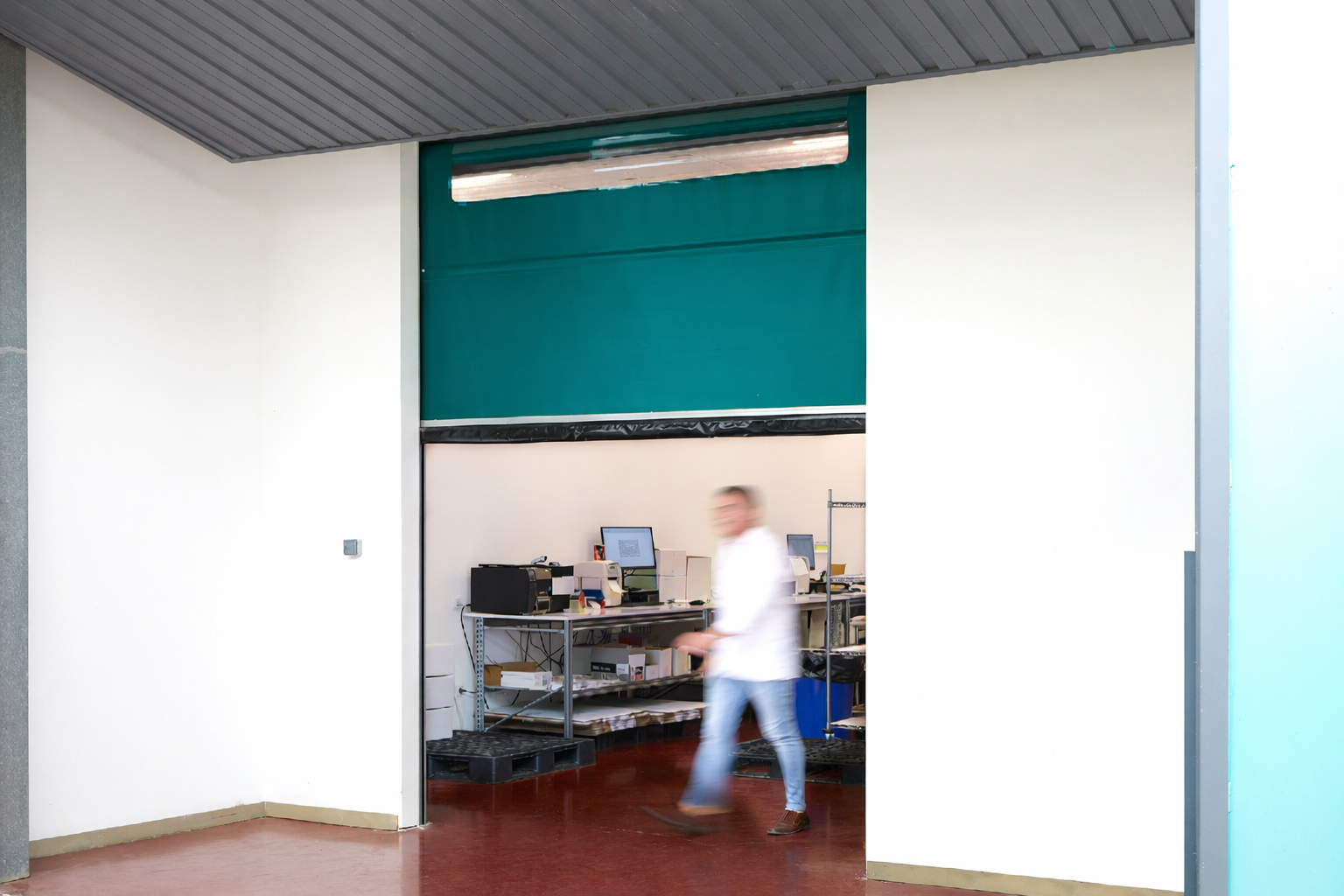
High-speed doors for indoor areas
In indoor passageways with high footfall, a high-speed roll-up door allows areas to be divided into sections without taking up any lateral space, while facilitating the flow of people and goods.
The configuration must be adapted to the size of the opening space, the volume of traffic and the specific requirements of each installation.
Where are high-speed roll-up doors installed?
High-speed industrial doors can be used in a wide range of environments where there is frequent traffic, and it is necessary to separate areas without hindering operations.
Logistics and distribution centres
Warehouses and logistics centres involve the constant movement of goods, vehicles and maintenance equipment.
High-speed doors can separate storage areas, order-preparation areas, loading bays or different sections within the same facility.
Their vertical opening keeps the passageway clear and allows them to keep pace with the flow of goods without taking up space around the opening space.
Industry and production lines
In an industrial facility, the door can form part of the production sequence itself.
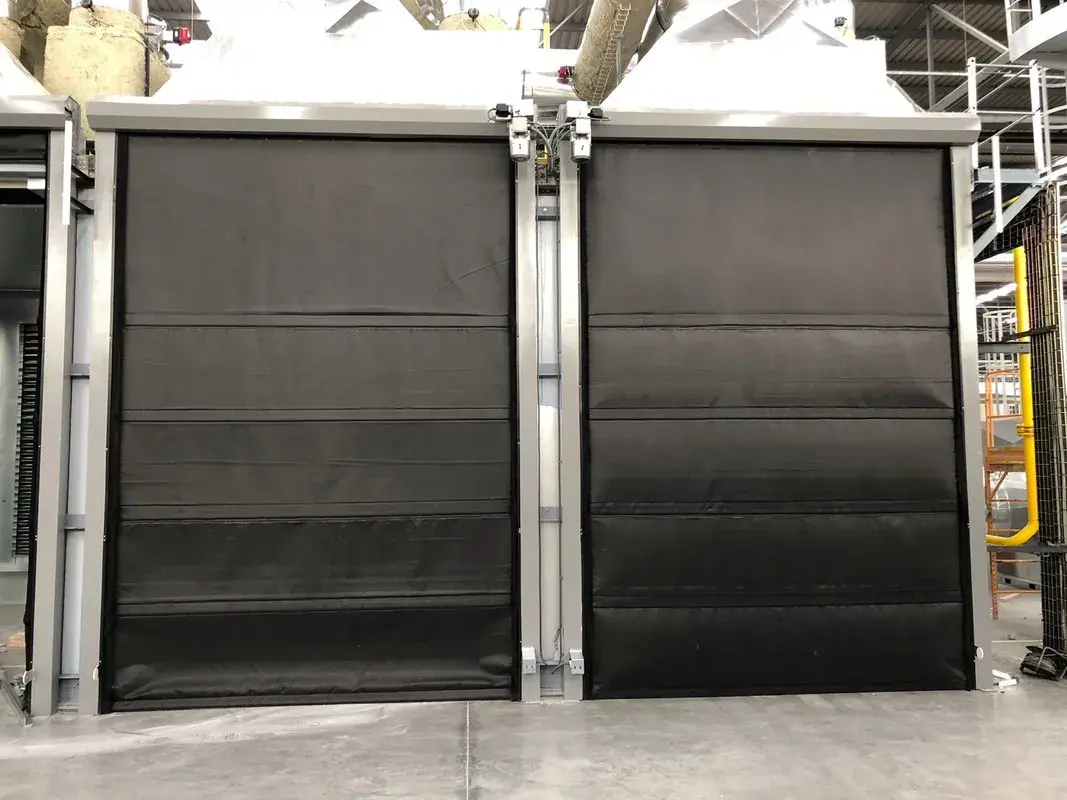
High-speed doors for automated production lines are designed to integrate automated systems and coordinate their opening and closing with the operation of the facility.
This configuration allows machinery or work areas to be separated and access to be granted only when the process requires it.
In this context, the door ceases to function as a standalone element and becomes part of the facility’s automation system.
Food industry and cold stores
In the food industry, there may be areas with different temperatures and environmental conditions that must remain separate despite frequent traffic.
High-speed doors help to reduce the time taken to move between these spaces and to better maintain temperature control and the cold chain.
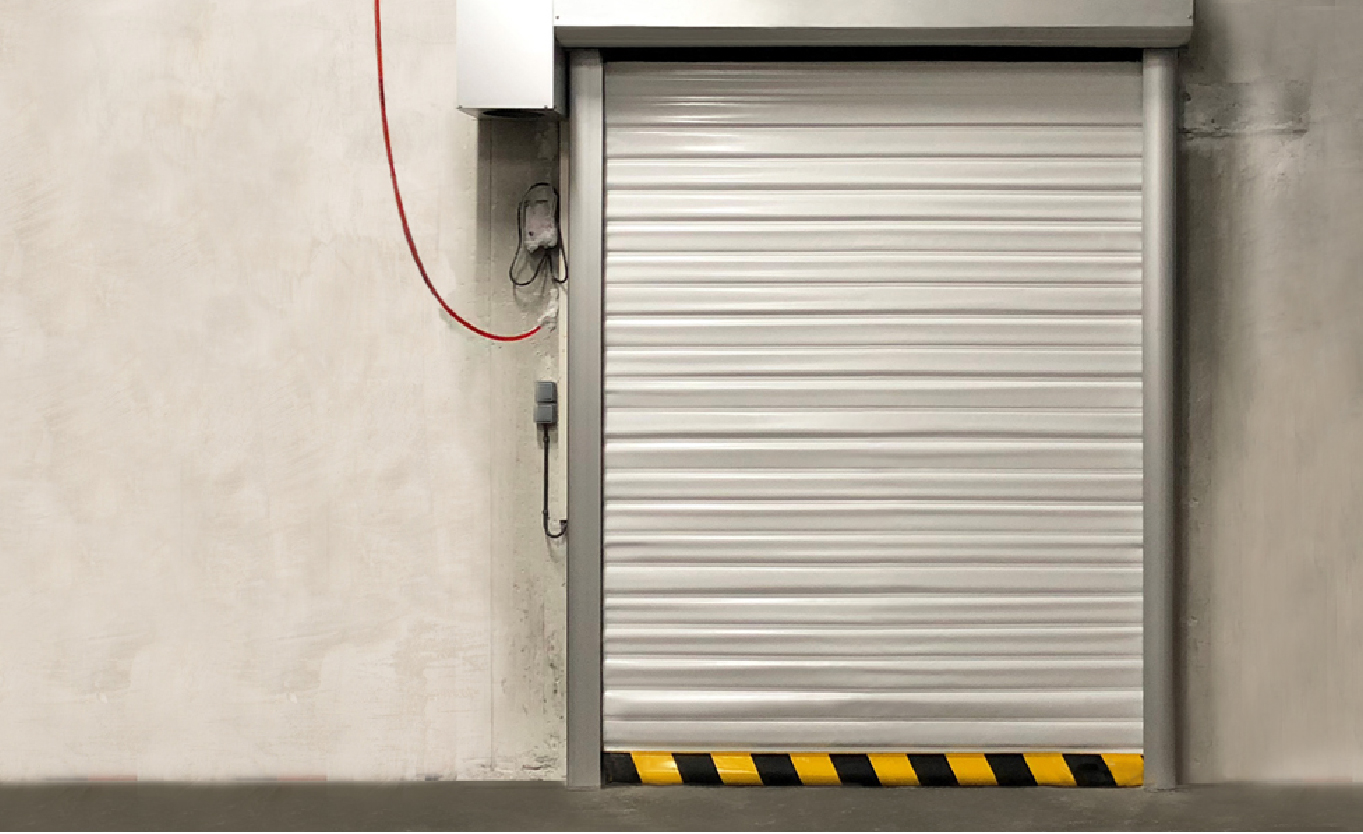
For specific applications, there are solutions such as high-speed doors for storage chambers down to 0 °C and high-speed doors for cold stores down to -30 °C.
In freezer rooms, the configuration must also be adapted to the temperature and humidity conditions of the facility to minimise problems such as frost build-up.
Different temperatures, different requirements
A storage room and a freezer room do not operate under the same conditions.
In cold storage facilities, temperature, humidity, frequency of opening and the temperature difference between zones must be considered when selecting a door.
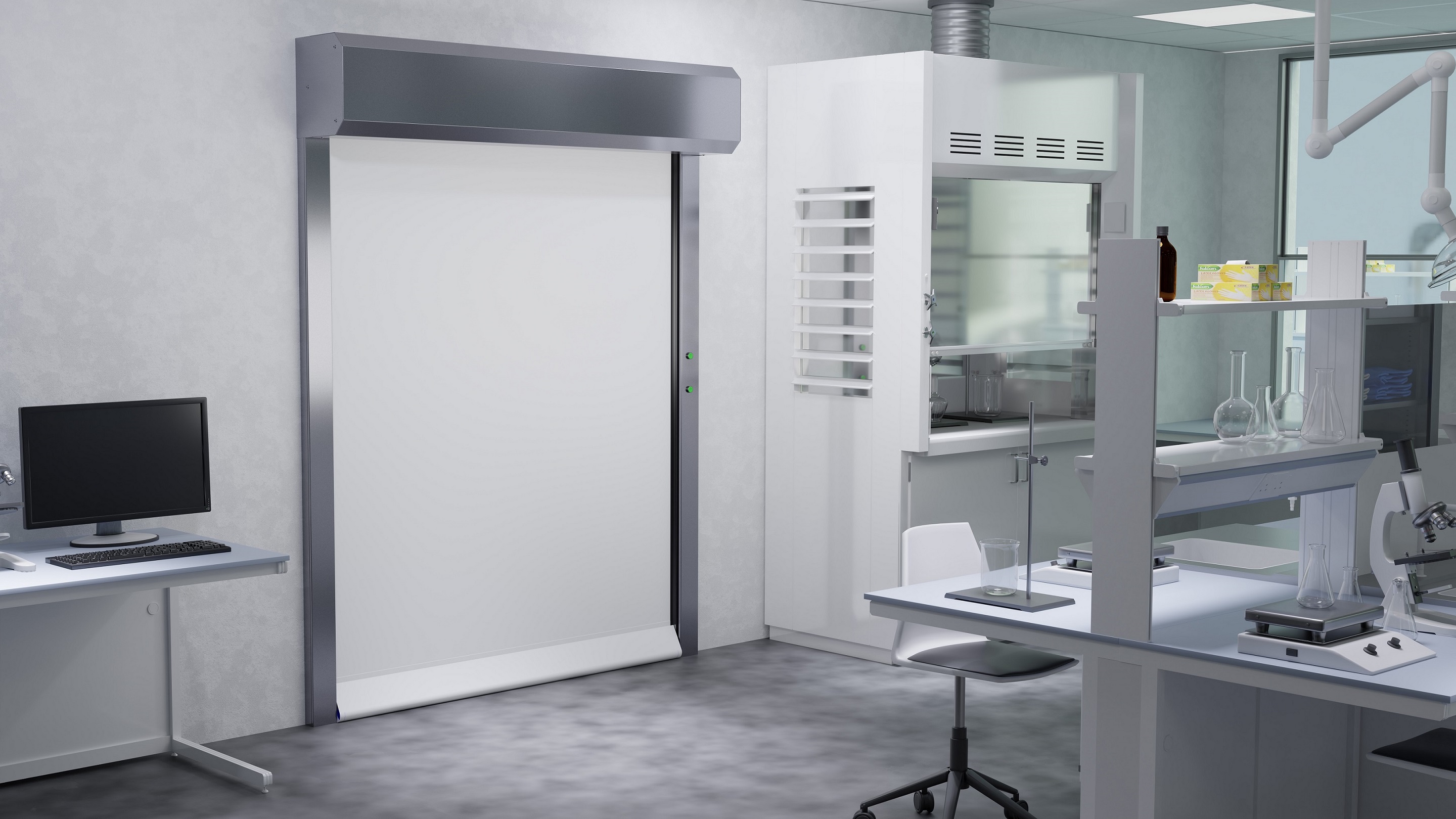
Laboratories and cleanrooms
In these spaces, the separation between zones may be determined by air permeability, cleanliness and pressure control.
High-speed doors for laboratories and cleanrooms are specifically designed for applications where these factors are of significant importance.
Manusa’s solution for these types of environments can operate with pressure differentials of up to 50 Pa and achieve Class 5 air permeability, combining frequent traffic with superior airtightness performance.
Car parks and vehicle traffic
High-speed doors can also be installed in vehicle access points and areas designated for vehicle traffic.
A self-repairing high-speed door for car parks allows entry and exit to be controlled while keeping the passage clear during traffic flow.
In this type of application, particular attention must be paid to the frequency of use, the dimensions of the vehicles, and the detection and safety systems.
Indoor or outdoor: location matters too
A door located between two indoor areas is not subject to the same conditions as one installed facing the outside.
In outdoor applications, it is necessary to analyse factors such as wind exposure and environmental conditions, as the required performance varies depending on the model, the size of the opening and the project.
Which type of high-speed roll-up door should you choose?
The configuration depends on the actual conditions at the installation site. This table provides some initial guidance:
This classification is not a substitute for a technical assessment. The dimensions of the opening space, the frequency of opening, the environmental conditions and the actual traffic flow must be analysed before choosing the final solution.
The door can also form part of the process
On automated production lines, the door can be integrated with the system’s operational logic to coordinate its opening and closing with other equipment.
This allows the door to be integrated into the production sequence, rather than being managed as a single component.
What should you consider before choosing a high-speed door?
An industrial high-speed roll-up door must be selected based on the actual operating conditions of the installation.
Frequency and intensity of use
A door that opens only occasionally has different requirements from one located in a passageway used throughout the day.
The cycle frequency influences the operator, the configuration and the required performance.
Dimensions and available space
The width and height of the opening space determine the model and configuration of the door.
It is also advisable to analyse the space around the opening space, vehicle traffic and the relationship with machinery, shelves or other nearby elements.
People, vehicles or machinery
It is necessary to identify who will be using the door.
People, forklift trucks, industrial vehicles or automated systems have different dimensions, speeds and movement patterns.
The drive and safety systems must be designed to meet these requirements.
Indoors or outdoors
A partition between two indoor areas presents different requirements from a door installed facing outdoors.
In the latter case, environmental conditions must be assessed and, where applicable, exposure to wind must be considered in accordance with the performance of the chosen model.
Temperature and environmental control
Where there is a significant difference in temperature, pressure or air quality, it is necessary to select a door specifically designed for those conditions.
A freezer room, a laboratory and a conventional warehouse may all use high-speed roll-up doors, but their configurations will differ.
Integration with other systems
In automated facilities, the door may need to communicate with PLCs, machinery, sensors or other systems.
This integration must be taken into account from the design stage so that opening and closing form an integral part of the plant’s operations.
High-speed roll-up door or industrial door?
The difference lies not only in how quickly they open.
A high-speed roll-up door is particularly suitable for areas with frequent traffic flow and it is important to minimise the time the opening remains open.
Other industrial systems may be more suitable when frequency of passage is lower, or when dimensions, exposure to the outside or environmental conditions require different performance characteristics.
Therefore, the question should not be which system is generally better, but which door best suits the actual use of each opening space.
If the project involves a choice between two specific types of high-speed doors, you can look up the comparison between high-speed roll-up and stacking doors.
What sort of high-speed door does your facility need?
Traffic flow, opening, environmental conditions and integration with other systems determine which configuration is best suited to your needs.
A high-speed door for every industrial need
High-speed roll-up doors enable the management of frequent traffic flows, partitioning of areas and maintenance of clear space around the opening. Their speed of operation can also help to reduce the time taken for air to exchange between zones with different conditions.
However, these benefits depend on choosing the correct configuration.
A logistics warehouse, an automated production line, a freezer room and a cleanroom can all use high-speed roll-up doors, but each requires different performance characteristics.
Analysing traffic flow, dimensions, surroundings, environmental conditions, safety and integration with other systems enables the selection of a door that consistently meets the facility’s actual operational requirements.
Manusa high-speed doors catalogue
 d01055es-atex.pdf
If this summer you want to improve the comfort of your premises or office, save energy and offer a better experience to your customers, find out how we can help you with the most suitable solution.
Contact us
Related solutions
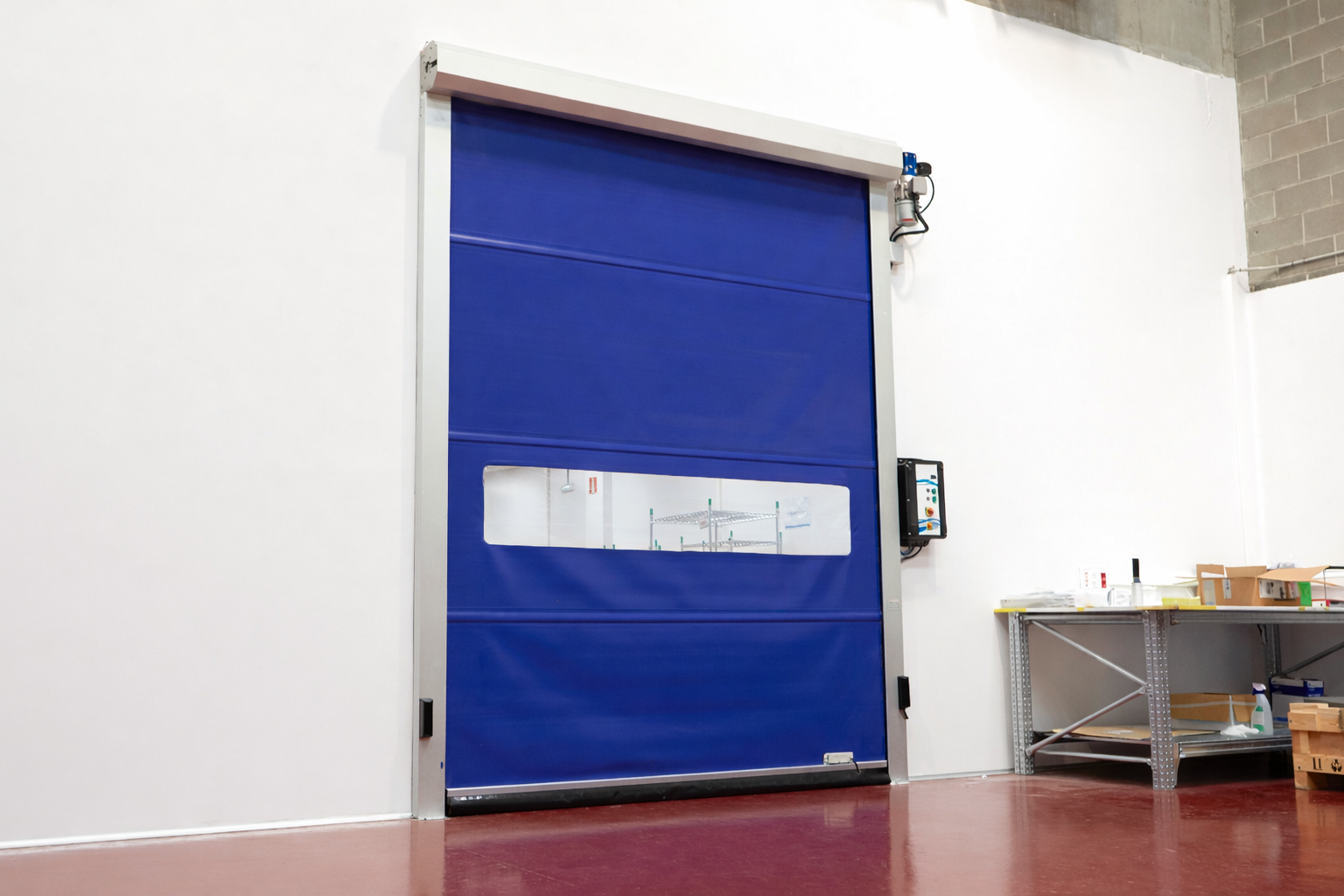
Aluminium high-speed roll-up door for indoor areas
High-speed reinforced aluminium roll-up door
High-speed roll-up door for cold-storage chambers up to -30º
High-speed roll-up door for laboratories and clean rooms