Andorra
 Austria
 Belgium
 Bosnia and Herzegovina
 Bulgaria
 Cyprus
 Czech Republic
 Denmark
 Deutschland
 France
 Greece
 Hungary
 Ireland
 Iceland
 Israel
 Italy
Italy
 Latvia
 Luxembourg
 Malta
Malta
 Montenegro
 Netherlands
 Norway
 Poland
 Portugal
 Romania
 Serbia
 Slovakia
 Slovenia
 Spain
Spain
 Sweden
 Switzerland
 Turkey
 Ukraine
 United Kingdom
 Argentina
 Bolivia
 Brasil
 Canada
 Chile
Chile
 Colombia
 Costa Rica
 Cuba
Cuba
 República Dominicana
 Ecuador
 El Salvador
 French Guiana
 Guatemala
 Honduras
 México
 Nicaragua
 Panamá
 Paraguay
 Perú
Perú
 Uruguay
 United States
 Venezuela
 Azerbaijan
 China
China
 Hong Kong
 India
India
 Indonesia
 Iraq
Iraq
 Japan
Japan
 Jordan
 Kuwait
 Lebanon
 Malaysia
 Maurice
 Myanmar
 Oman
Oman
 Pakistan
 Philippines
 Qatar
Qatar
 Russia
 Saudi Arabia
 Singapore
 South Korea
 Syria
Syria
 Thailand
 United Arab Emirates
 Vietnam
 Algeria
 Angola
 Egypt
Egypt
 Ghana
Ghana
 Kenya
Kenya
 Libya
Libya
 Morocco
 Nigeria
 Sénégal
 South Africa
 Tanzania
 Tunisie
 Australia
 New Zealand

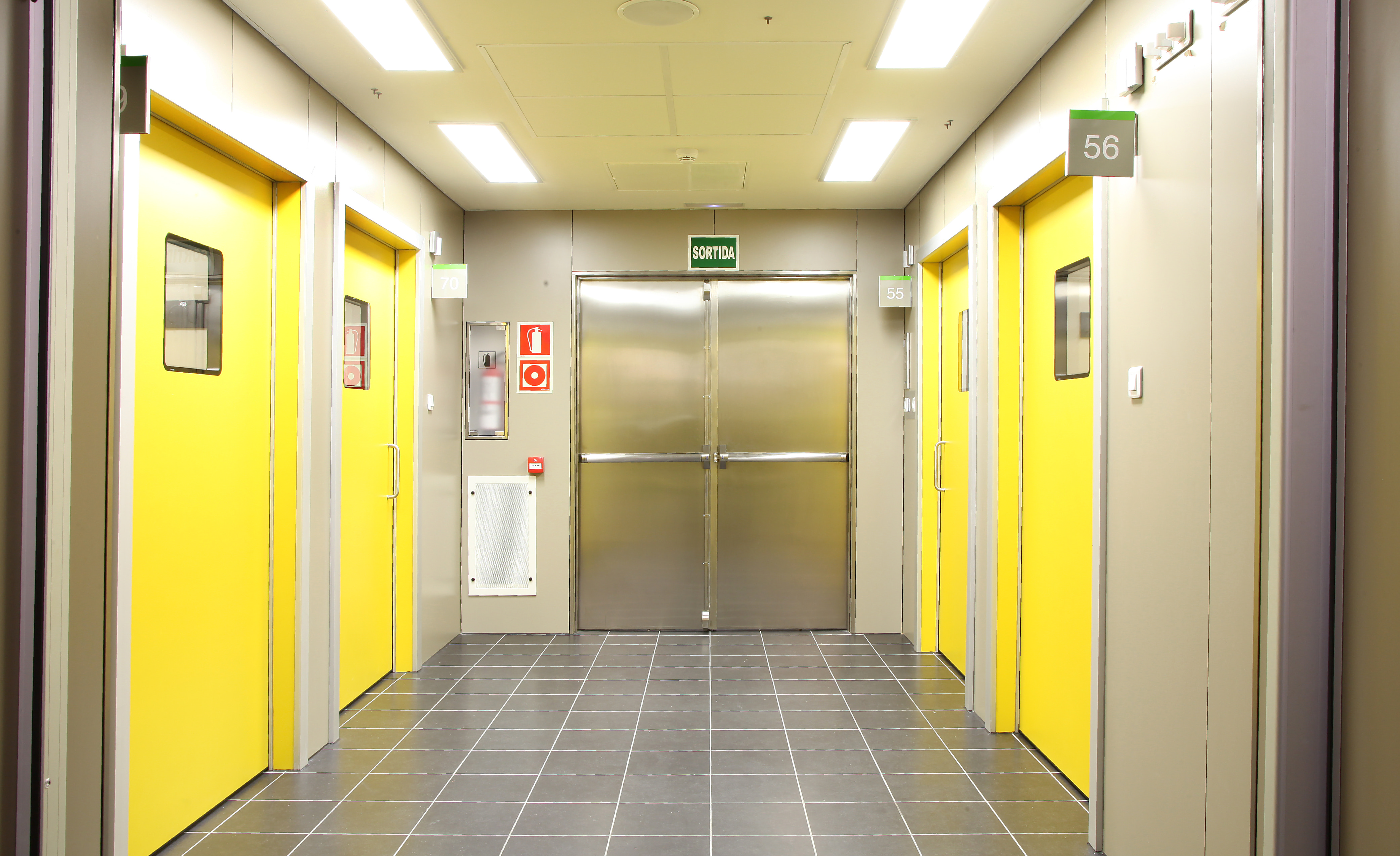
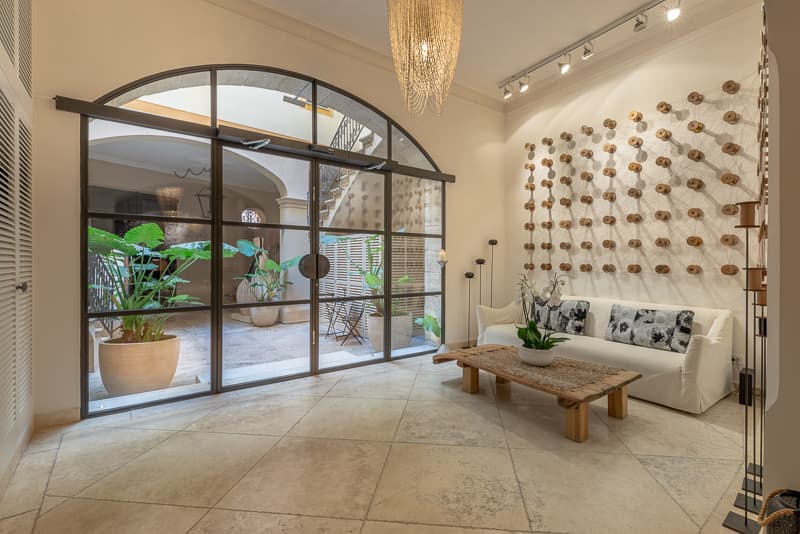
Automatic swing doors consist of one or two leaves of automatic pedestrian doors that open with a turning movement. An operator automates this movement and controls the opening and closing.
They are particularly suitable when the characteristics of the opening space do not allow the installation of automatic sliding or telescopic doors. Unlike sliding doors, swing doors do not require a lateral path for the movement of the leaves. However, they do require a space that allows for the necessary rotation during opening.
The difference between door types influences the choice made. There isn´t one typology inherently better than another; the best solution depends on the opening space, the intended use, accessibility, and the specific characteristics of the project.
Additionally, it is possible to automate an existing manual swing door, provided that a technical assessment verifies that the door leaf, hardware, and the installation are suitable for incorporating automation effectively.
An automatic swing door is assessed when the opening space configuration and the intended use make this type of door the appropriate solution.
What is an automatic swing door?
An automatic swing door maintains the opening movement through a characteristic motion of a manual swing door, but includes an automated mechanism that controls its opening and closing.
Depending on the configuration, the movement can be performed by pushing or dragging, and it can be installed to swing in the desired direction.
Manusa automatic swing doors can include, among other functions:
● Low-energy modes.
● Push&Go activation, which allows the opening to be initiated by a slight manual push.
● Specific anti-wind operation mode.
● Regulated opening and closing movement.
● Integration with sensors, push buttons and other activation devices.
● Different customisation options and accessories.
These functions must be configured based on the door features and its intended use.
When should an automatic swing door be installed?
The main criterion of choice is the configuration of the opening and the surrounding space.
When the design of an entrance prevents the installation of a sliding or telescopic door to be installed, the sash can offer an alternative because it does not require the leaves to move laterally.
This does not mean that a swing door is always the recommended option in a renovation, interior spaces or an existing building. The typology should be selected according to the specific conditions of the project.
To determine this, the commercial and technical team must assess:
● The width and features of the opening space.
● The direction of the opening.
● The area required for the sweeping of the leaves.
● The flow and frequency of passage.
● Accessibility requirements.
● The location of the door.
● The intended use of the door.
● The features of the existing door if automation is being considered.
From these variables, it is determined whether an automatic swing door meets the needs of the space and what configuration it requires.
An automatic swing door does not require a lateral path to open, but it does need an area for the door leaf to rotate. Therefore, when choosing between a swing door and a sliding door, it is important to consider both the opening space and the surrounding space around the door.
Swing or sliding door: what is the difference?
The main difference lies in the movement of the leaves.
In an automatic sliding door, the leaves move laterally. In a swing door, they rotate on an axis.
It is not merely a matter of identifying which type of door occupies less space overall. Each typology uses space differently.
A swing door avoids the lateral movement of the leaves, while a sliding door avoids the sweeping area. The project must determine which configuration best meets the needs of the environment.
You can find out the main differences between typologies in the Complete Guide to automatic doors.
Can an existing swing door be automated?
In some projects, yes. One of the possibilities of this typology is to incorporate an operator into a manual swing door already installed, without having to replace the entire door.
Before performing this intervention, the technical team must verify the following:
● The leaf.
● The hardware.
● The opening space.
● The direction of the opening.
● The door surroundings.
● The frequency and conditions of use.
Therefore, this should not be considered a universal automation or a solution that never requires intervention on the existing installation.
When feasible, automating a manual swing door can improve accessibility and ease of use without having to replace the entire door.
Accessibility and automatic opening
Automation helps create a more accessible passage by reducing the need for manual door opening.
This facilitates its use by individuals with reduced mobility, wheelchair users, families with strollers or those transporting packages.
The door can be activated by various devices based on the project requirements, such as sensors or push buttons. This allows the drive system to be adapted to the needs of the environment and its users.
Accessibility should be considered from the beginning as one of the criteria to define automation, not only as an additional benefit.
Which automatic door is right for your project?
Our team assesses the opening space, intended use and accessibility needs to recommend the best configuration.
Where can automatic swing doors be installed?
Automatic swing doors can respond to very different projects as long as their movement and configuration are suitable for the space.
Here are some applications:
● Residential buildings that require automated swing doors.
● Hotels and restaurants with door configurations that require this type of opening.
● Public buildings where accessible passage is essential.
● Certain sanitary facilities that require specific swing solutions.
The sector alone does not determine the choice. Two doors located inside the same building may need different typologies depending on their function, location and frequency of use.
Swing doors in healthcare environments
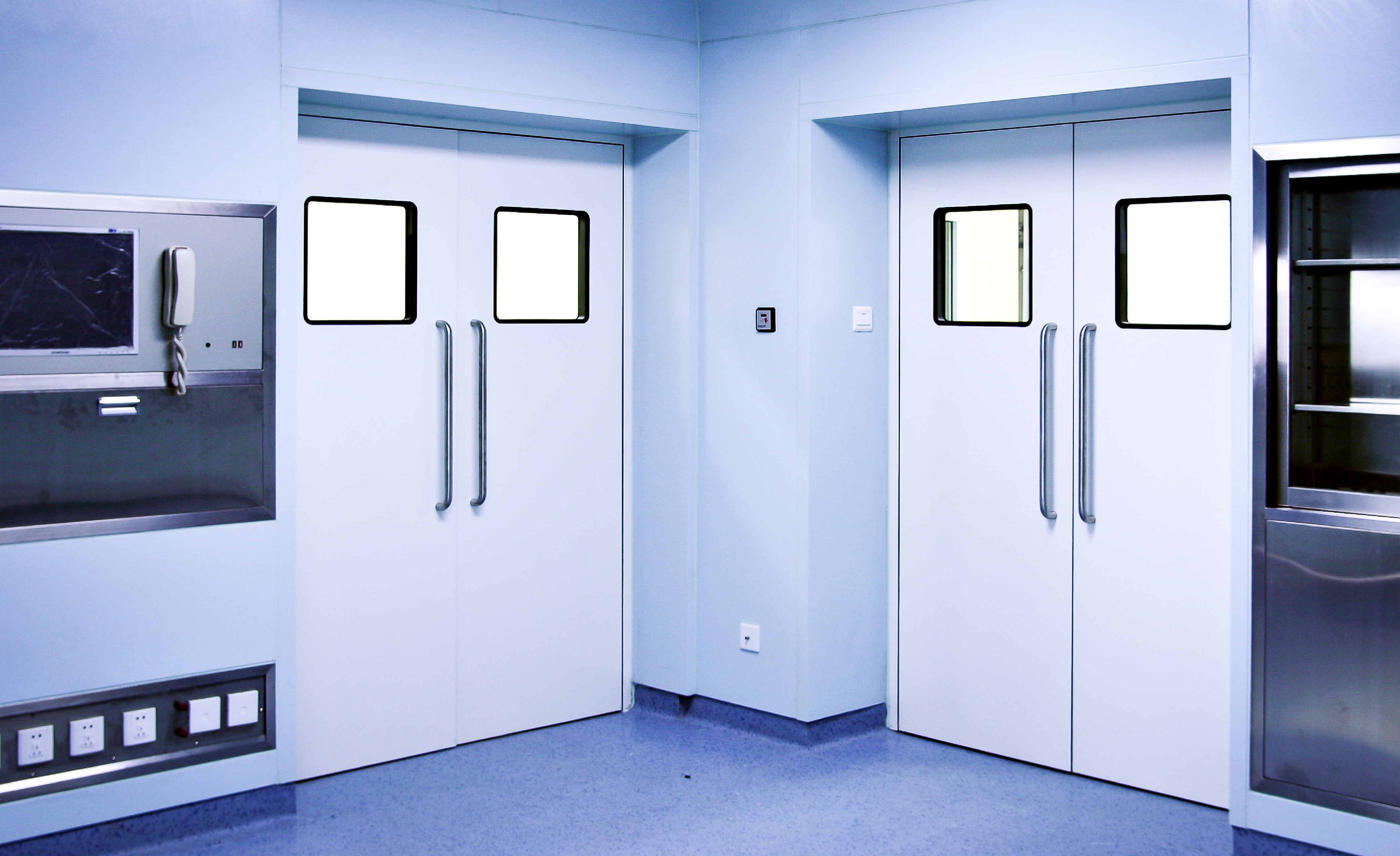
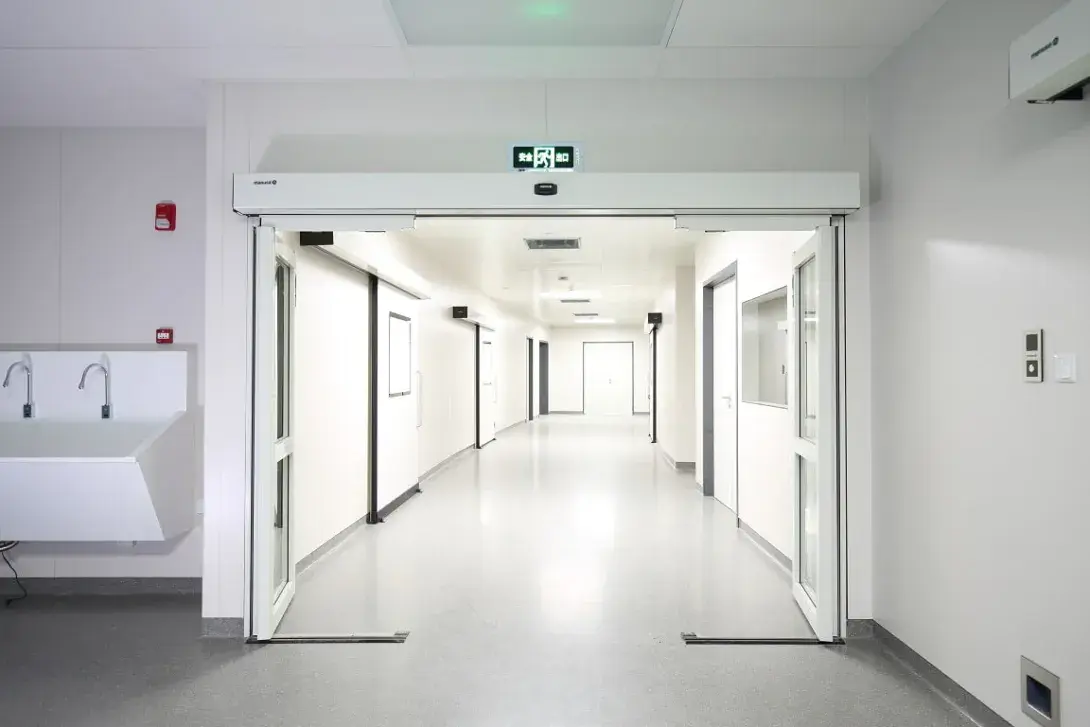
In the healthcare sector, there is a specific solution: the automatic hermetic swing door.
This type of door is not simply a standard swing door with airtight features. It is a door designed for environments where airtightness is a crucial requirement.
It can be suitable in certain healthcare environments that demand specific airtightness conditions, such as operating rooms or controlled spaces.
In these projects, the door must be tailored to meet the needs of the area and the requirements established during the design phase.
Automatic hermetic swing door
A specific solution for healthcare areas that require an automatic swing-motion opening while ensuring airtightness features.
What functions can the operator include?
The operator is the element that automates and controls the movement of the swing door.
Manusa solutions can incorporate features such as Push&Go, low-energy modes or specific anti-wind operation.
Push&Go allows the opening cycle to start with a slight manual push of the door. The low energy modes enable the operation to be tailored to particular applications based on the installation conditions.
The operator can also work with various activation devices, such as sensors, pushbuttons or readers.
These functions alone do not determine which door should be selected. First, it is essential to define the right solution for the opening space and the intended use; then the operator can be configured according to those specific needs.
What do you need to assess to select a swing door?
First, you need to define what kind of situation the door needs to solve.
The commercial and technical teams must analyse:
The characteristics of the opening.
The existing door, if there is one.
The direction and the opening space area.
The frequency of use.
The accessibility requirements.
The location and exposure of the door.
The required activation system.
The specific services that the project may require.
This analysis will help determine whether an automatic swing door is the appropriate choice and guide the configuration process.
Installation, safety and maintenance
An automatic swing door should be installed by professionals. The movement of the door must be configured based on factors such as the door itself, the operator, the activation devices, and its setting conditions.
In addition, the safety of automatic pedestrian doors must comply with the EN 16005 regulation for automatic doors as well as any other applicable requirements for each installation.
Once the door is installed, it is necessary to maintain the components and devices in proper condition for the service life of the door.
The inspections ensure the correct performance of the operator, sensors, activation devices and mechanical elements, while also detecting possible incidents.
You can learn more about this topic in the content concerning automatic door maintenance.
Choosing a swing door starts by analysing the project
Automatic swing doors provide an alternative when the characteristics of the opening space do not allow certain sliding configurations to be installed. They can also be used to automate an existing manual swing door in some projects.
Their key feature is the movement of the leaves: they rotate instead of sliding laterally. Therefore, they do not require a lateral path, but do need a sweeping area that must be considered during the project planning phase.
Various functions such as Push&Go, low-energy modes, anti-wind operation, and different activation forms allow for configuration of the door’s operation to meet installation needs.
The choice should begin with the opening space, intended use and accessibility. This information allows the technical team to determine if an automatic swing door is the right solution and to define its configuration.
Documentation
 Swing operator Vector Catalogue

If this summer you want to improve the comfort of your premises or office, save energy and offer a better experience to your customers, find out how we can help you with the most suitable solution.
Contact us
Recomended products
Hermetic automatic swing door