 Andorra
 Austria
 Belgium
 Bosnia and Herzegovina
 Bulgaria
 Cyprus
 Czech Republic
 Denmark
 Deutschland
 France
 Greece
 Hungary
 Ireland
 Iceland
 Israel
 Italy
Italy
 Latvia
 Luxembourg
 Malta
Malta
 Montenegro
 Netherlands
 Norway
 Poland
 Portugal
 Romania
 Serbia
 Slovakia
 Slovenia
 Spain
Spain
 Sweden
 Switzerland
 Turkey
 Ukraine
 United Kingdom
 Argentina
 Bolivia
 Brasil
 Canada
 Chile
Chile
 Colombia
 Costa Rica
 Cuba
Cuba
 República Dominicana
 Ecuador
 El Salvador
 French Guiana
 Guatemala
 Honduras
 México
 Nicaragua
 Panamá
 Paraguay
 Perú
Perú
 Uruguay
 United States
 Venezuela
 Azerbaijan
 China
China
 Hong Kong
 India
India
 Indonesia
 Iraq
Iraq
 Japan
Japan
 Jordan
 Kuwait
 Lebanon
 Malaysia
 Maurice
 Myanmar
 Oman
Oman
 Pakistan
 Philippines
 Qatar
Qatar
 Russia
 Saudi Arabia
 Singapore
 South Korea
 Syria
Syria
 Thailand
 United Arab Emirates
 Vietnam
 Algeria
 Angola
 Egypt
Egypt
 Ghana
Ghana
 Kenya
Kenya
 Libya
Libya
 Morocco
 Nigeria
 Sénégal
 South Africa
 Tanzania
 Tunisie
 Australia
 New Zealand

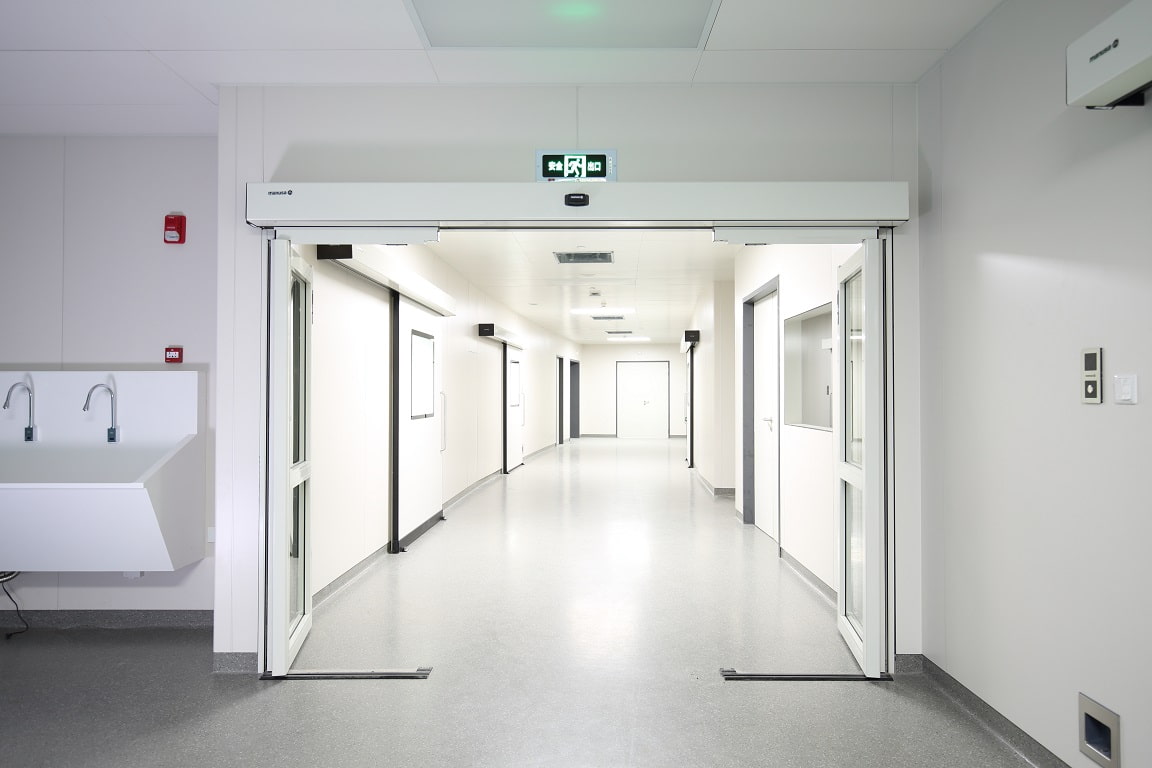
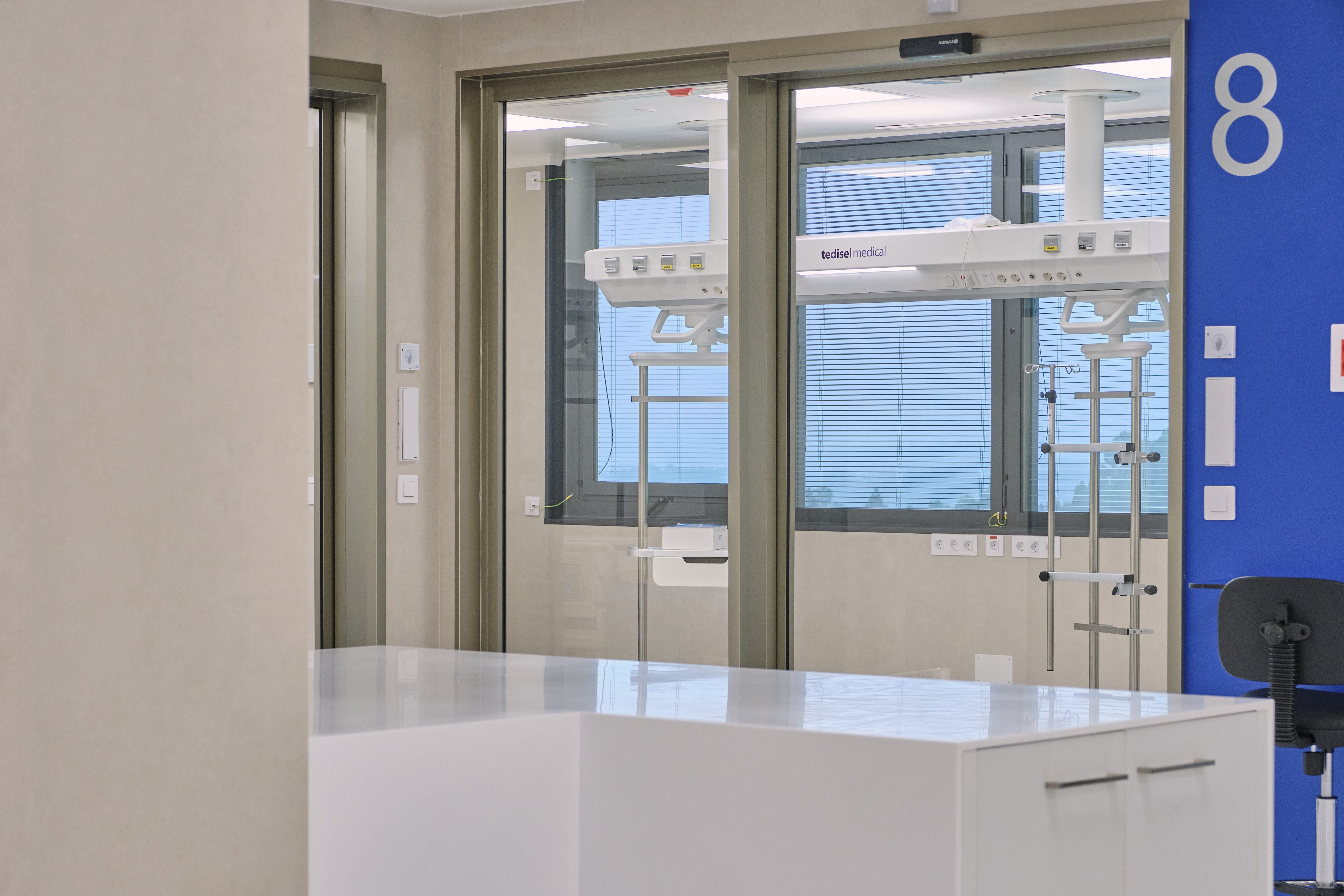
The UNE-EN 16005+A1:2024 establishes the requirements and test methods related to the safety of use of automatic pedestrian doorsets. It is applied to sliding, hinged, revolving, swinging flip-flap and folding doors with horizontal movement, both in usual entrances and in evacuation routes and emergency exits.
The standard addresses the risks associated with automatic operation, such as crushing, impact, shearing, drag, entrapment or uncontrolled movements. It also defines the protection measures and the procedures necessary to verify that these risks have been adequately reduced.
The EN 16005 standard is a harmonised safety standard. Its application allows for the presumption of conformity with the requirements of the Machinery Directive covered by the standard itself to be established. It does not replace the full conformity assessment procedure or any product standards that may apply.
What does the EN 16005 standard cover?
EN 16005 specifies the design requirements and test methods applicable to pedestrian doors operated by electromechanical, electrohydraulic, electromagnetic or pneumatic systems.
It aims to control the hazards that the door may pose during intended operation and in the event of reasonably foreseeable misuse. To this end, it assesses the door as a whole, rather than just the operator, sensors or door leaves individually.
The standard covers, among other aspects:
- The functional safety of the system.
- The power supply and controls.
- The materials and geometry of the door leaves.
- The activation of the door.
- The movement of the door leaves.
- Protection devices.
- The limitation of impact forces.
- Safety distances.
- Low-energy operation.
- Use in escape routes.
- The durability of safety measures.
The analysis covers the various stages of a door's life cycle, from transport and installation through to use, maintenance, dismantling and disposal.
The Comprehensive Guide to Automatic Doors provides further information on this subject and outlines the main types of doors, the relevant standards and the selection criteria.
What is the current version of EN 16005?
The current version in United Kingdom is BS-EN 16005+A1:2024, published on 20 November 2024. It is identical to the European standard EN 16005:2023+A1:2024 and has replaced UNE-EN 16005:2013 and its corrigendum UNE-EN 16005:2013/AC:2015.
The reference to EN 16005:2023+A1:2024 was published in the Official Journal of the European Union as a harmonised standard in support of Directive 2006/42/EC on machinery. From 16 March 2026, this is the edition that confers a presumption of conformity when EN 16005 is used as a harmonised standard.
Directive 2006/42/EC will continue to apply until 13 January 2027. Regulation (EU) 2023/1230 on machinery will apply from 14 January 2027.
To which automatic doors does it apply?
UNE-EN 16005+A1:2024 applies to automatic pedestrian doorsets, both internal and external, intended primarily for the passage of people.
It covers the following types:
- Automatic sliding doors.
- Automatic swing doors.
- Automatic revolving doors.
- Swinging flip-flap doors.
- Folding doors with horizontally sliding leaves.
It also covers automatic pedestrian doors integrated into other systems where their primary function is to allow people to pass through safely.
The standard regulates safety of use in:
- Entrances and common pedestrian walkways.
- Evacuation routes.
- Emergency exits.
- Doors with fire resistance or smoke control features, solely in relation to the risks arising from their automatic operation.
In the latter case, EN 16005 does not assess fire resistance or smoke control performance. These characteristics are regulated by UNE-EN 16034 and the other standards applicable to compartmentalisation.
Which products and functions are excluded from EN 16005?
The presence of an automatic operator is not sufficient to determine the applicable standard. The door's primary function, the type of movement and its intended use must be taken into account.
| Regulated aspect | Reference standard |
| Safety in the use of automatic pedestrian doors | UNE-EN 16005 |
| Performance characteristics of automatic pedestrian doors, excluding swing doors | UNE-EN 16361 |
| Industrial, commercial doors, garage and entrance gates | UNE-EN 13241 |
| Fire resistance and smoke control | UNE-EN 16034 |
| Installation, use and maintenance in UK | BS EN 16005 |
EN 16005 does not apply, among other products, to:
- Vertically moving doors.
- Lift doors.
- Doors fitted to vehicles.
- Doors intended primarily for the passage of goods or vehicles.
- Doors used in industrial operations.
- Movable partitions.
- Turnstiles.
- Platform doors.
- Traffic barriers.
- Doors intended for use in potentially explosive atmospheres.
Industrial doors, which are primarily designed for the passage of vehicles or goods, must be considered within their own specific framework. The article on the EN 13241 standard for industrial doors explores this specific area.
Differences between EN 16005 and EN 16361
EN 16005 regulates safety in use and test methods relating to the automatic operation of doors.
UNE-EN 16361:2014+A1:2017, on the other hand, is a standard that applies to the product and performance characteristics of automatic pedestrian doors — excluding swing doors — initially designed for installation with an automatic drive system. This edition remains in force.
Both standards may apply to the same door, but they serve different purposes:
- EN 16005 addresses the risks arising from automatic operation.
- EN 16361 sets out the product framework and performance characteristics for doors included in its scope.
What risks does the EN 16005 standard cover?
The standard identifies the significant hazards that must be taken into account during the design, assessment and operation of an automatic pedestrian door.
System and power-related risks
The system must respond safely to potential situations relating to:
- Functional safety failures.
- Power supply failures or disruptions.
- Malfunctioning controls.
- Unintended activation.
- Uncontrolled movements.
- Manual operation of the door.
The assessment must verify how the system performs under normal conditions and in the event of faults that could affect safety.
Mechanical risks
The movement of the leaves may create hazardous areas posing a risk of:
- Crushing.
- Impact.
- Shearing.
- Entrapment.
These hazards may occur between two moving leaves, between a leaf and a fixed part, at the main or secondary closing edges, and within the area swept by the door.
The position and type of hazard vary depending on the door type, the direction of movement and the installation configuration. For this reason, the same safety measures are not suitable for all doors.
How should hazardous areas be protected?
EN 16005 does not require all doors to be fitted with the same number or type of sensors. The measures to be taken must be selected based on the door type, its movement, the installation environment, and the overall risk assessment.
The measures include:
- Physical guards and barriers.
- Safety distances.
- Sensitive protection devices.
- Monitoring of the movement zone.
- Limitation of impact forces.
- Low-energy operation.
- Control, slowing down or stopping of movement.
Protection can be achieved through a specific measure or through a combination of several measures. The key factor is that the residual risk is reduced to the level required for the intended use.
Safety features on sliding doors
In the case of automatic sliding doors, particular attention must be paid to:
- The main and secondary closing edges.
- The gap between the moving leaves.
- The movement of the leaves towards fixed parts.
- The opening area.
- The passageway.
Safety devices must prevent the door from closing or continuing its movement when a person is in a position of risk.
Safety features for swing doors
For automatic swing doors, the following are assessed:
- The area swept by the door leaf.
- The main closing edge.
- The secondary edges.
- Points close to the pivot point.
- The risk of impact during opening and closing.
Depending on the assessment carried out, risk reduction may be achieved through the use of protection devices, safety distances, force limitation or low-energy operation.
Safety features for revolving doors
Automatic revolving doors have specific requirements relating to:
- Peripheral speed.
- The area swept by the door leaves.
- The points of convergence between moving and fixed parts.
- Detection in the passageway.
- Lighting.
- The emergency stop function.
- Protection against impact and entrapment.
Therefore, a revolving door is not assessed using exactly the same criteria as a sliding or hinged door.
What are the requirements for escape routes and emergency exits?
Not just any automatic door can be installed on an escape route. The door must have been specifically designed, assessed and configured to fulfil that function.
EN 16005 covers various configurations, including:
- Doors with a panic release or break-out function.
- Sliding and folding doors without a panic function.
- Swing doors without a panic function.
- Revolving doors used in escape routes.
- Systems for selecting and locking operating modes.
Therefore, the door must be assessed as part of the building's evacuation strategy. It is not sufficient simply to check that it operates correctly during normal use.
How is compliance verified?
The UNE-EN 16005 standard sets out procedures for verifying the safety measures applied to the door.
Verification may include inspections, measurements and tests relating to:
- Functional safety.
- Power supply and controls.
- Materials and geometry.
- Door activation.
- The movement of the door leaves.
- Dynamic forces.
- Protection devices.
- Safety distances.
- Low-energy operation.
- Functions related to evacuation.
- The durability of the safety measures.
Compliance must be verified for the door's complete configuration and under the conditions intended for its installation.
How does EN 16005 relate to CE marking?
Compliance with EN 16005 does not, in itself, constitute CE marking for an automatic door.
EN 16005:2023+A1:2024 is a harmonised standard in support of Directive 2006/42/EC. Its application confers a presumption of conformity with the essential health and safety requirements covered by the standard, but the manufacturer remains responsible for the entire conformity assessment procedure.
This procedure includes, amongst other elements:
- Risk assessment.
- Implementation of the necessary risk reduction measures.
- Preparation of technical documentation.
- Verification of the whole door.
- Issuance of the declaration of conformity.
- Affixing of the CE marking.
- Provision of the instructions for use and maintenance.
Where the door is also covered by UNE-EN 16361 or incorporates fire resistance or smoke control features, the requirements set out in the relevant product standards must also be taken into account.
How do installation and maintenance affect this?
The safety specified during the design phase must be maintained after it is made operational.
A door that has been correctly assessed may no longer meet its initial specifications if:
- It is installed differently from as intended.
- The position of the protection devices is altered.
- The operating modes are modified.
- Components are replaced without assessing their compatibility.
- The operation of the safety systems is not checked.
- Repairs or modifications are carried out without being documented.
The EN 16005 standard sets out the safety requirements that must be taken into account in the design, installation, use and maintenance of automatic pedestrian doors.
Maintenance must be carried out in accordance with the manufacturer's instructions and must include checks on, among other things:
- Detection and protection devices.
- Controls and mode selectors.
- Emergency functions.
- The condition of the door leaves and moving parts.
- The forces and speeds, where necessary.
- Any repairs and modifications carried out.
There is no single maintenance schedule that applies to all doors. Maintenance intervals should be determined in accordance with the manufacturer's instructions, frequency of use, operating conditions and applicable requirements.
You can find further information in the section on the maintenance of automatic doors.
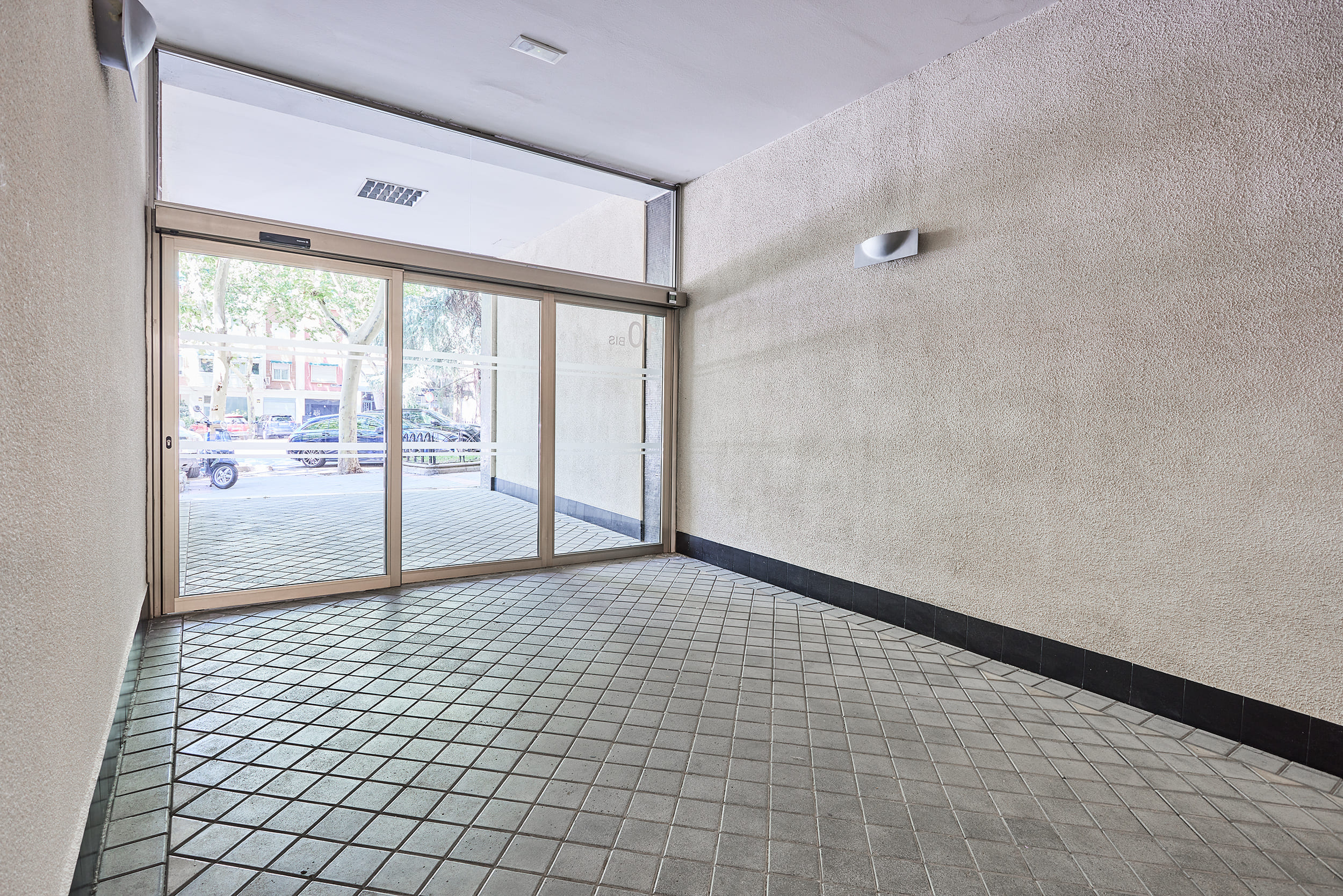
EN 16005 assesses the safety of the door as a whole
Compliance with EN 16005 does not depend on the inclusion of a specific sensor or on testing each component individually.
The door leaves, the operator, the controls, the safety devices and the installed configuration must function as a single system capable of controlling the risks associated with movement.
The measures selected must take into account:
- The type of door.
- The installation environment.
- The intended use.
- The presence of hazard points.
- Evacuation conditions, where applicable.
- Maintenance requirements throughout its service life.
It is also important to distinguish between safety in use and other performance characteristics. Fire resistance, smoke control, resistance to intrusion and special safety functions are governed by their own technical frameworks.
Based on these requirements, you can browse Manusa's range of automatic doors and find out about the configurations available for each project.
If this summer you want to improve the comfort of your premises or office, save energy and offer a better experience to your customers, find out how we can help you with the most suitable solution.
Contact us