 Andorra
 Austria
 Belgium
 Bosnia and Herzegovina
 Bulgaria
 Cyprus
 Czech Republic
 Denmark
 Deutschland
 France
 Greece
 Hungary
 Ireland
 Iceland
 Israel
 Italy
Italy
 Latvia
 Luxembourg
 Malta
Malta
 Montenegro
 Netherlands
 Norway
 Poland
 Portugal
 Romania
 Serbia
 Slovakia
 Slovenia
 Spain
Spain
 Sweden
 Switzerland
 Turkey
 Ukraine
 United Kingdom
 Argentina
 Bolivia
 Brasil
 Canada
 Chile
Chile
 Colombia
 Costa Rica
 Cuba
Cuba
 República Dominicana
 Ecuador
 El Salvador
 French Guiana
 Guatemala
 Honduras
 México
 Nicaragua
 Panamá
 Paraguay
 Perú
Perú
 Uruguay
 United States
 Venezuela
 Azerbaijan
 China
China
 Hong Kong
 India
India
 Indonesia
 Iraq
Iraq
 Japan
Japan
 Jordan
 Kuwait
 Lebanon
 Malaysia
 Maurice
 Myanmar
 Oman
Oman
 Pakistan
 Philippines
 Qatar
Qatar
 Russia
 Saudi Arabia
 Singapore
 South Korea
 Syria
Syria
 Thailand
 United Arab Emirates
 Vietnam
 Algeria
 Angola
 Egypt
Egypt
 Ghana
Ghana
 Kenya
Kenya
 Libya
Libya
 Morocco
 Nigeria
 Sénégal
 South Africa
 Tanzania
 Tunisie
 Australia
 New Zealand

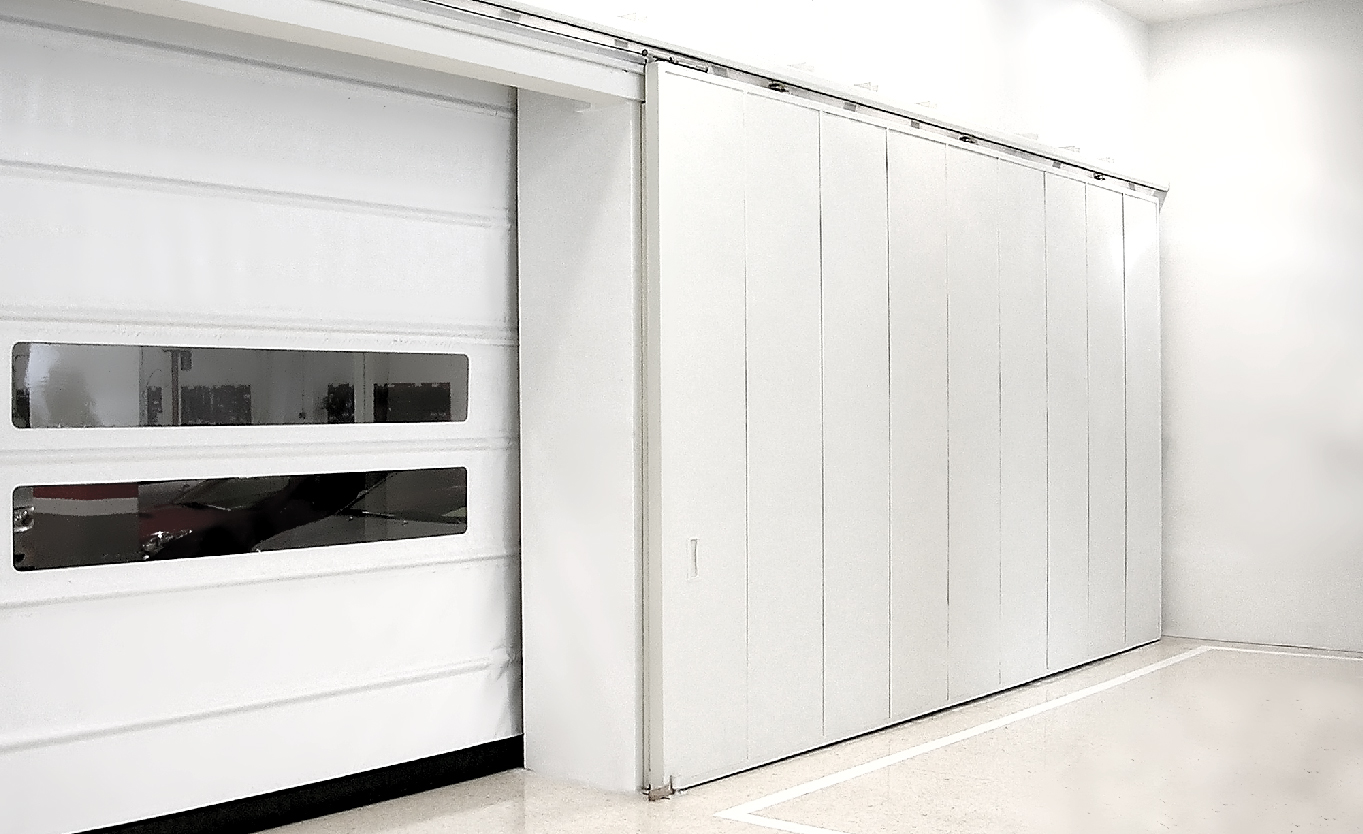
Industrial doors play a much more important role than it seems at first glance. They not only allow the passage of people, vehicles or goods; they also contribute to organising workflows, separating areas with different environmental conditions, improving safety and ensuring the continuity of production processes.
In a logistics warehouse, a production plant or a distribution centre, a door is an active part of daily operations. Therefore, choosing the right solution can make the difference between an efficient facility and one that generates interruptions, time losses or operational difficulties.
Actualmente, la mayoría de puertas industriales incorporan sistemas diseñados para integrarse en procesos productivos y logísticos cada vez más exigentes. Además, las puertas para naves industriales se han convertido en un elemento estratégico para mejorar la productividad, la seguridad y la organización de los flujos de trabajo.
En esta guía encontrarás los principales tipos de puertas industriales, sus aplicaciones, las características técnicas que debes valorar, la normativa que les afecta y los criterios que conviene tener en cuenta antes de tomar una decisión.
Currently, most industrial doors incorporate systems designed to be integrated into increasingly demanding production and logistics processes. Doors for industrial warehouses have become a strategic element to improve productivity, safety and the organisation of workflows.
In this guide, you will find the main types of industrial doors, their applications, the technical characteristics to evaluate, the regulations that impact them, and the key criteria to consider before making a decision.
What are industrial doors and why are they important?
Industrial doors are systems designed to meet the demands of production, logistics and storage environments. Unlike doors installed in public buildings, these solutions are prepared to withstand intensive use, integrate into complex operational processes and operate reliably even in demanding conditions.
Their function goes far beyond opening and closing pathways. Depending on the application, they can help to control temperature differences between areas, protect production processes, improve facility safety, and facilitate the transportation of goods.
In fact, many operations directly depend on the effectiveness of these doors. When a facility operates with hundreds of movements each day, every second counts.
Types of industrial doors and their appropriate uses
There isn’t a single solution that is valid for all facilities. Each activity presents specific needs and requires different characteristics.
Before analysing each solution in detail, it is advisable to have an overview of the main types of industrial doors and the applications where they usually add the most value.
Industrial sectional doors | Exterior enclosures and warehouses |
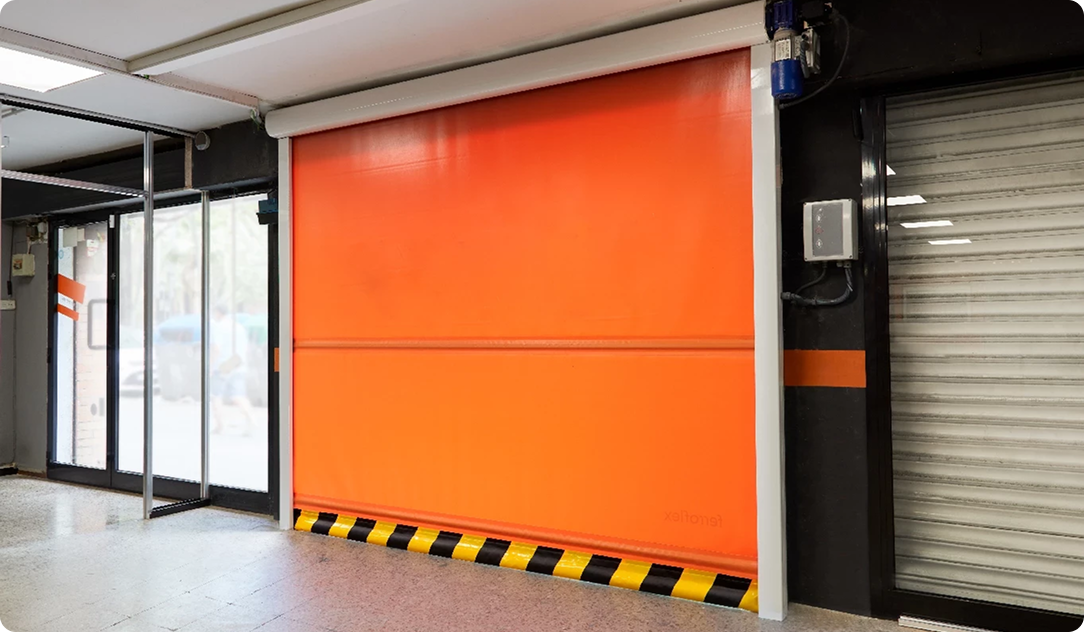
High-speed roll-up doors
The high-speed roll-up doors are characterised by rolling up the canvas on themselves during the opening.
Their compact design allows for the use of the available space and offers an effective solution for multiple industrial applications.
High-speed roll-up doors are designed for environments where the speed of operation is crucial.
Their ability to open and close in a few seconds helps to reduce waiting times, optimise internal flows and minimise interference between different work areas.
Depending on the application, different solutions can be found, such as:
High-speed self-repairing doors.
High-speed stackable doors.
High-speed interior doors.
High-speed logistics doors.
This type of door is especially useful in facilities where activity is constant, and movement occurs continuously throughout the day.
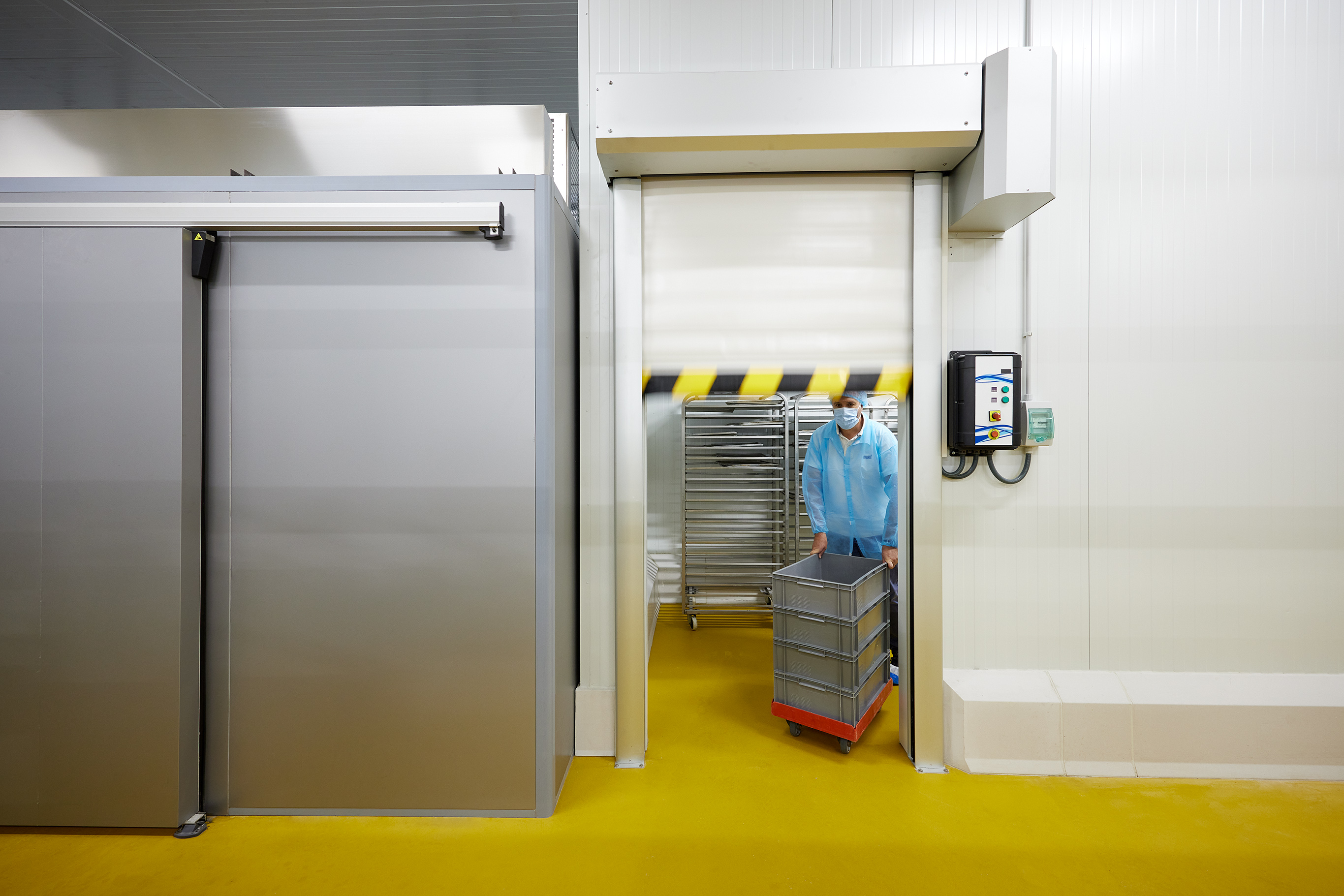
High-speed doors for conservation areas
Certain sectors need to maintain stable thermal conditions to ensure product or process quality.
The doors for conservation areas are designed to limit temperature exchanges between areas with different environmental conditions, helping to ensure the facility’s operational stability.
They are usually in:
Food industry.
Refrigerated logistics platforms.
Distribution centres for perishable products.
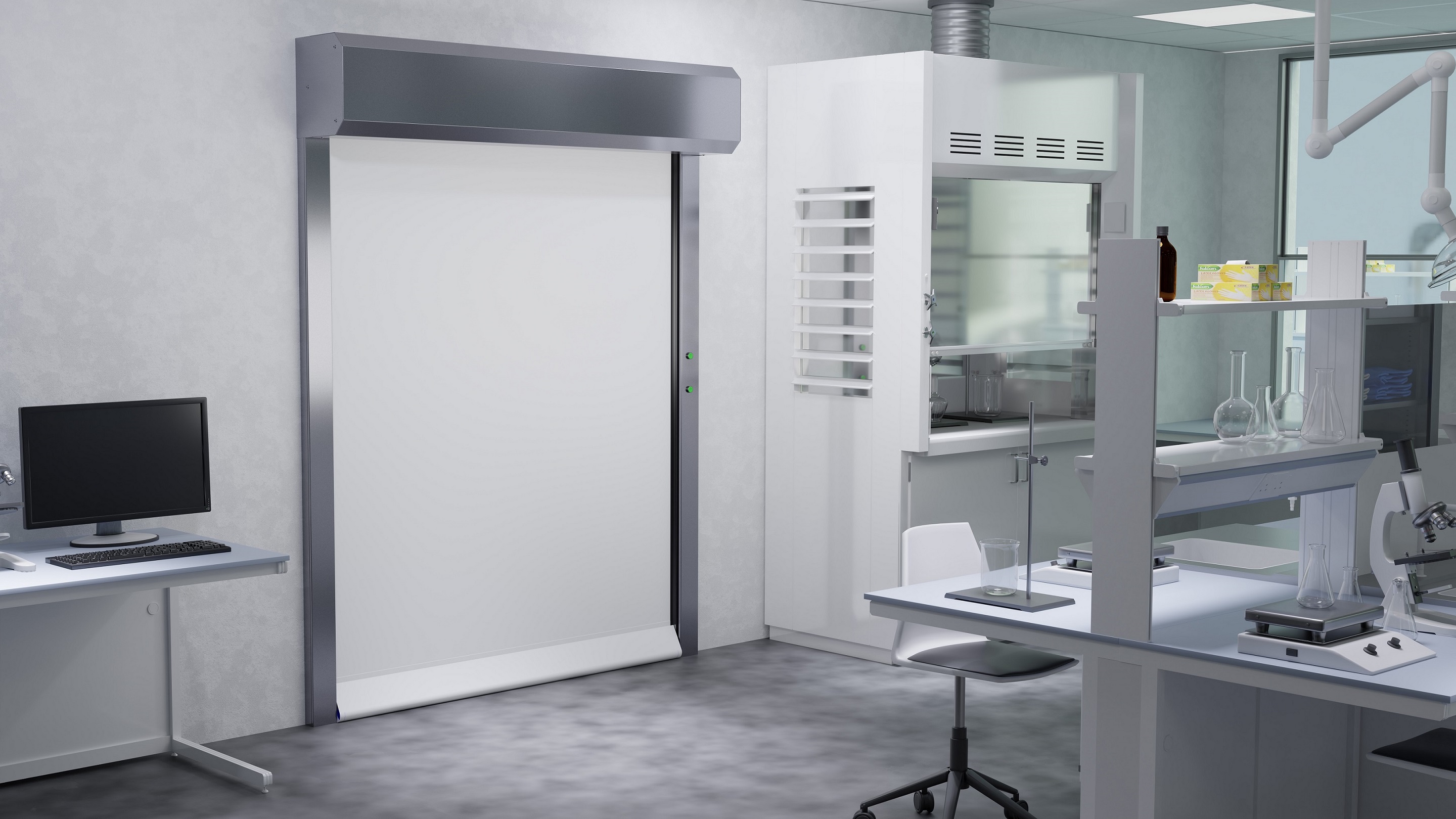
High-speed door with fire curtain
Sectorization is one of the most important aspects in many industrial environments.
Fire curtain doors combine the functionality of a high-speed door with the ability to act as a barrier in case of fire, enabling the separation of different sectors within a facility without compromising daily operations.
Its application is especially interesting in facilities where the regulations require the compartmentalisation of spaces or the protection of specific areas.
Doors for automated production lines
Industrial automation has increased the need for solutions capable of integrating with machinery, robots and production systems.
Doors for automated lines make it possible to protect work areas, separate processes, and coordinate their operation with the rest of the facility.
An example of this is the PLE doors, which are commonly used in industrial manufacturing robotic lines.
Industrial sectional doors
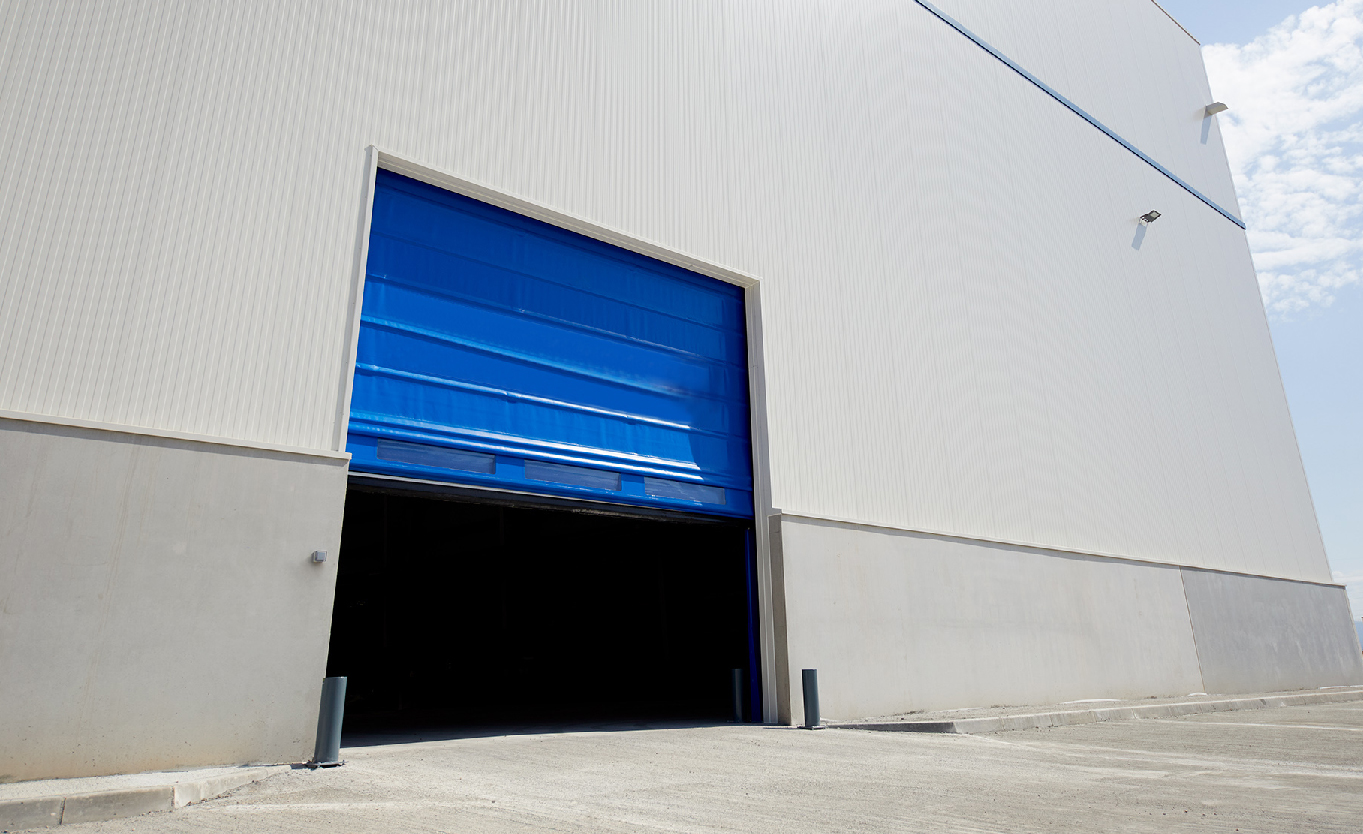
Industrial sectional doors are a common solution in industrial facilities, warehouses, and logistics centres.
Its vertical opening optimises the available space and facilitates access for large vehicles. Additionally, they offer a good performance in applications where it is important to separate the interior from the exterior areas of the facility.
They are especially common in:
External enclosures.
Logistics centres.
Industrial warehouses.
Production spaces.
Where are industrial doors used?
Industrial doors are present in numerous sectors. However, the needs of the food industry are not the same as those of a logistics centre or an automotive plant.
Logistics and distribution
In logistics, speed and operational continuity are essential.
The doors help to manage the entry and exit of goods, organise workflows and optimise the internal movements of vehicles and workers.
Food industry
In this sector, it is especially important to control the environmental conditions between different work areas.
Industrial doors help to maintain more stable processes and to separate areas with different operational requirements.
Automotive
Automotive plants operate with high levels of automation and a constant flow of materials.
Therefore, they usually require solutions that can be integrated with production lines and withstand intensive use.
Pharmaceutical industry
The protection of certain processes requires careful control of the environmental conditions.
In these facilities, the doors are part of the overall strategy of environmental control and separation between areas.
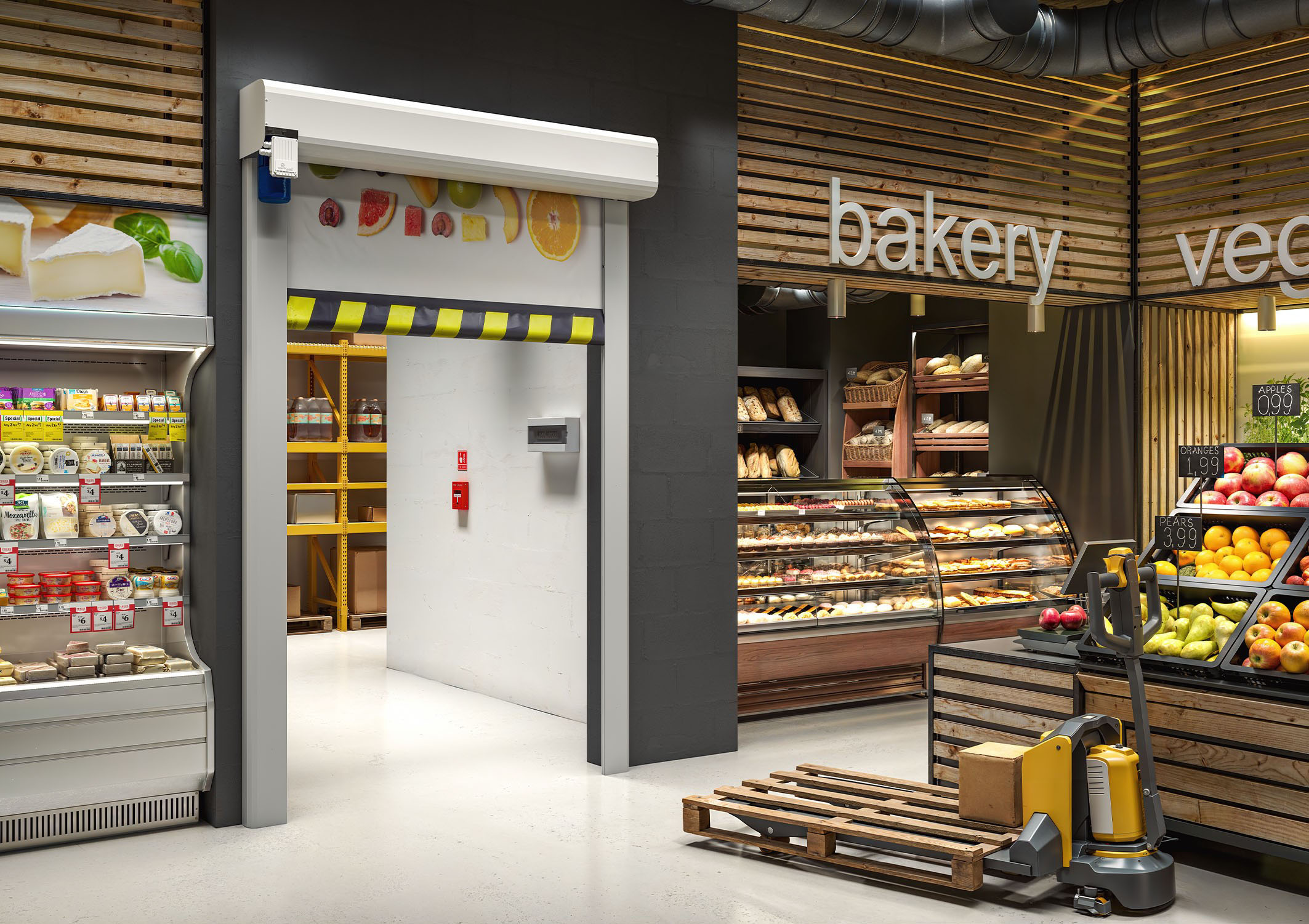
Retail and large surfaces
Large commercial establishments use industrial doors in loading areas, warehouses and service spaces where logistics efficiency is key.
Airports and logistics hubs
The constant movements of goods and equipment require reliable solutions that are ready to withstand continuous activity.
Chemical industry
Working conditions can be particularly demanding. Therefore, it is essential to select doors adapted to the specific characteristics of each facility.
Technical characteristics that you should evaluate
Aside from the type of door, several technical factors directly affect the performance of the facility.
Opening speed and frequency of use
In certain applications, a difference of a few seconds can have a significant impact on daily operations.
For this reason, it is advisable to analyse both the opening speed and the number of cycles that the door must perform each day.
Resistance to intensive use
A door that is used a few times a day is not the same as one that makes hundreds of daily movements.
The durability of the components and the ability to withstand continuous use are fundamental aspects in any industrial environment.
Insulation and environmental control
In many cases, the doors help to separate areas with different conditions of temperature, humidity or cleanliness.
Therefore, it is important to assess its ability to limit interference between spaces and contribute to maintaining stable operating conditions.
In this context, insulating industrial doors are especially useful in facilities where it is necessary to control the temperature between different work areas or minimise environmental interferences that may affect production processes.
Materials and construction
Choosing an industrial door also depends on the materials used in its construction, as these can affect factors such as resistance, durability or adaptation to the working environment.
Depending on the solution, they can be:
Galvanised steel structures, suitable for applications that require high mechanical resistance.
Aluminium profiles, which combine lightness, resistance and good integration in different environments.
Technical PVC curtains, common in high-speed doors due to their flexibility and ability to withstand intensive use.
The combination of these materials will depend on the characteristics of the facility, the type of activity and the specific requirements of each application.
Integrated security systems
The detection and security systems protect both the people and the equipment operating in the facilities.
Sensors, photocells and other devices help to ensure safe operation even in high-activity environments.
Security is one of the most important aspects in any industrial facility. Industrial doors are equipped with detection and protection technologies that help reduce risks and ensure safe operations for both people and goods. The integration of sensors, photocells and other security systems makes it possible to adapt the operation of the door to the needs of each working environment.
Automation and integration with processes
It is becoming increasingly common for industrial doors to be integrated with logistics management systems, automated machinery or complex production processes.
This integration capability enables improved coordination among different elements of the facility and increased operational efficiency.
Main advantages of industrial doors
A properly selected industrial door provides benefits that go far beyond opening and closing an entrance.
Among the main advantages are:
Optimisation of logistics flows.
Reduction of operation times.
Improvement of operational efficiency.
Temperature control between zones.
Reduction of thermal losses.
Increased security for people and goods.
Less entry of dust, noise or external agents.
High durability in demanding environments.
Integration with automated processes.
Contribution to the energy efficiency of the facilities.
In certain applications, especially when there are different environmental conditions between work areas, an appropriate door can help limit unnecessary exchanges between spaces and favour a more efficient management of the facility resources.
In many cases, these improvements directly impact the facility's daily productivity.
What regulations should industrial doors comply with?
Industrial doors must meet different technical and safety requirements established by European regulations.
The main reference is the EN 13241, applicable to industrial, commercial and garage doors.
The industrial doors regulations also establish requirements related to the safety of use, the performance of operation and the evaluation of certain risks associated with the daily operation of these systems.
In addition, the doors must have the corresponding CE marking, which proves their compliance with the applicable legislation.
Depending on the sector and the activity developed, there may be additional requirements related to safety, fire protection or specific environmental conditions.
For this reason, it is advisable to analyse each project individually before selecting a solution.
What maintenance do industrial doors need?
Industrial doors are subjected to demanding and continuous use. Therefore, preventive maintenance is essential to ensure its proper functioning.
Regular inspections make it possible to detect possible failures before they affect the operation of the facilities and help prolong the useful life of the equipment.
An industrial door maintenance program allows for anticipating possible incidents, reducing unexpected interruptions and guaranteeing the operational continuity of the facilities, especially in environments where the activity is constant.
Among the elements that are usually inspected are:
Security systems.
Sensors and photocells.
Mechanical elements.
Automatisms.
General condition of the structure.
The Key to Maintenance
Proper maintenance helps reduce incidents and maintain the operational continuity of the facility.
How to choose the right industrial door?
The choice should be based on the actual needs of each environment.
Some of the most important factors are:
Predicted traffic level.
Frequency of daily cycles.
Type of industrial activity.
Thermal insulation needs.
Environmental conditions.
Required level of security.
Operation speed required.
Space available.
Integration with logistics processes.
Analysing these aspects from the beginning allows us to select a solution capable of responding to the current and future needs of the facility.
Conclusion
Industrial doors are a strategic element within any production or logistics facility. Its influence on security, operational efficiency and the organisation of workflows goes far beyond simply opening an access point.
Knowing the different types of industrial doors, understanding their applications and correctly assessing aspects such as operating speed, insulation, automation, or maintenance allows you to make better decisions and obtain better long-term performance.
If you are evaluating a new facility or the renovation of an existing door, having specialised advice will help you identify the most appropriate solution for the specific needs of your activity.
If this summer you want to improve the comfort of your premises or office, save energy and offer a better experience to your customers, find out how we can help you with the most suitable solution.
Contact us