Andorra
 Austria
 Belgium
 Bosnia and Herzegovina
 Bulgaria
 Cyprus
 Czech Republic
 Denmark
 Deutschland
 France
 Greece
 Hungary
 Ireland
 Iceland
 Israel
 Italy
Italy
 Latvia
 Luxembourg
 Malta
Malta
 Montenegro
 Netherlands
 Norway
 Poland
 Portugal
 Romania
 Serbia
 Slovakia
 Slovenia
 Spain
Spain
 Sweden
 Switzerland
 Turkey
 Ukraine
 United Kingdom
 Argentina
 Bolivia
 Brasil
 Canada
 Chile
Chile
 Colombia
 Costa Rica
 Cuba
Cuba
 República Dominicana
 Ecuador
 El Salvador
 French Guiana
 Guatemala
 Honduras
 México
 Nicaragua
 Panamá
 Paraguay
 Perú
Perú
 Uruguay
 United States
 Venezuela
 Azerbaijan
 China
China
 Hong Kong
 India
India
 Indonesia
 Iraq
Iraq
 Japan
Japan
 Jordan
 Kuwait
 Lebanon
 Malaysia
 Maurice
 Myanmar
 Oman
Oman
 Pakistan
 Philippines
 Qatar
Qatar
 Russia
 Saudi Arabia
 Singapore
 South Korea
 Syria
Syria
 Thailand
 United Arab Emirates
 Vietnam
 Algeria
 Angola
 Egypt
Egypt
 Ghana
Ghana
 Kenya
Kenya
 Libya
Libya
 Morocco
 Nigeria
 Sénégal
 South Africa
 Tanzania
 Tunisie
 Australia
 New Zealand

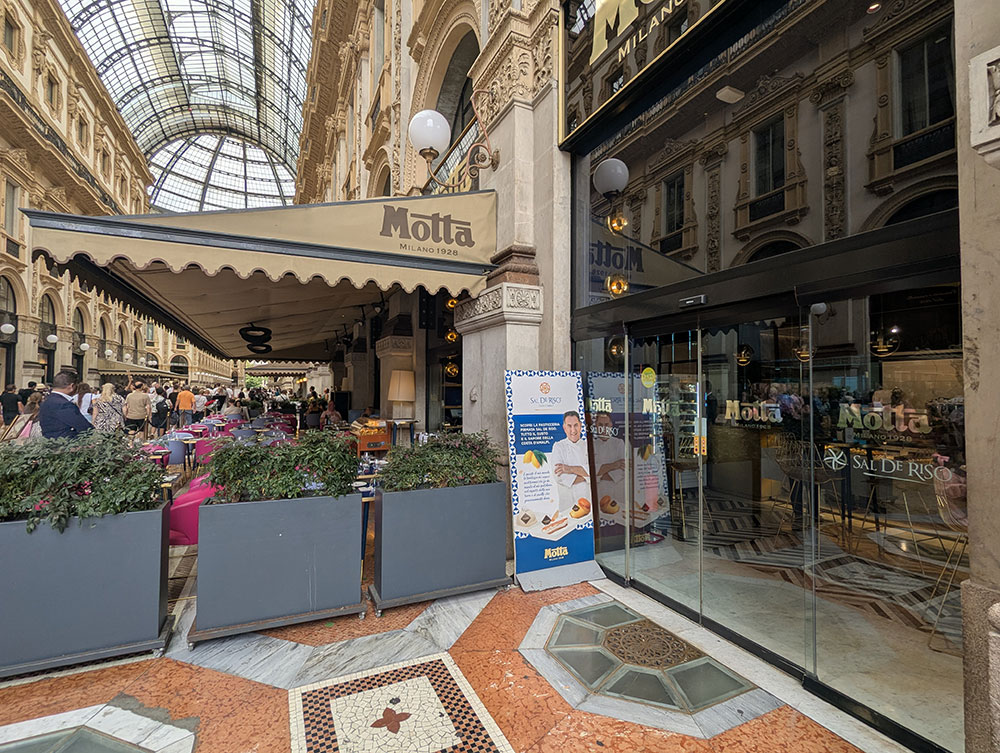
Inside the famous Vittorio Emanuele II Galleries, in the heart of Milan's Piazza del Duomo, is a historic café that is part of the city's and Italian culture: Motta Milano 1928. Faced with the need to modernise access to the establishment, the project presented a significant challenge: to adapt our solution to an iconic architectural setting, such as the Galleries, as well as to the image and aesthetics of an almost century-old establishment. To renovate its entrances and achieve a solution that respected both characteristics, Manusa installed automatic sliding doors with a central opening and fixed panels. This solution harmonises perfectly with the café’s style and design, providing a more comfortable, accessible and efficient entrance.
This establishment, with almost 100 years of history, stands as an icon of tradition and a symbol of Italian modernity and quality. It is a famous meeting place for locals and thousands of tourists who visit it every day. In fact, one of the most significant challenges has been to adapt to a limited space with a large influx of people. For this reason, the new automatic doors, thanks to their obstacle detection sensors and automatic reopening, ensure the safety of people and the proper functioning of the access.
Another goal of the project is to reduce energy consumption. Unlike manual doors, automatic doors only open when necessary and do so quickly, preventing climate control losses and achieving significant energy savings.
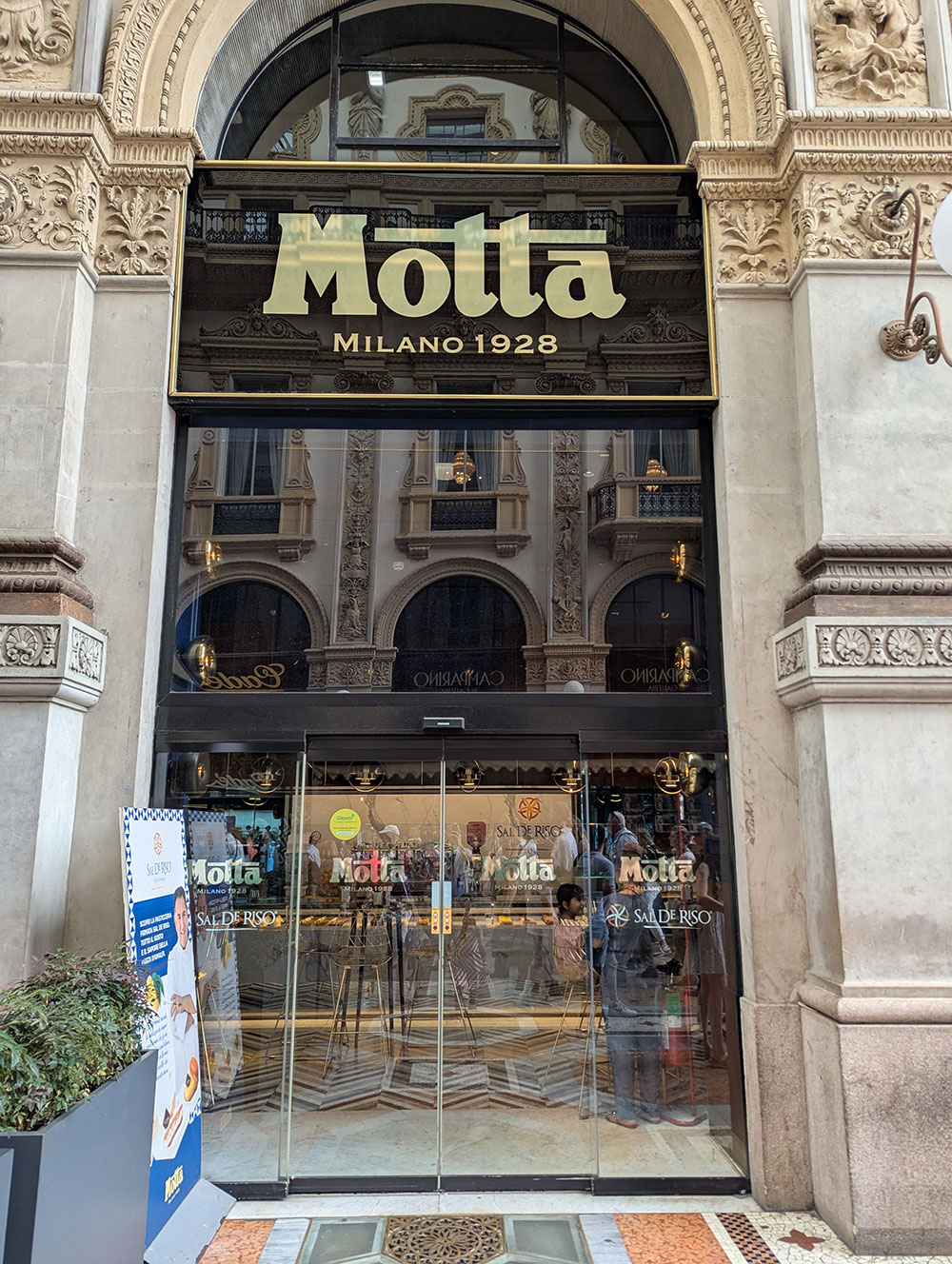
Automatic doors integrated into a historic setting
Aesthetic integration is essential. Motta Milano 1928 is the work of the Colli Daniel Architetto architectural studio, featuring a contemporary and elegant interior whose design transcends time. Recently, it was transformed into Sal De Riso, a patisserie owned by master pastry chef Salvatore De Riso, while preserving the original aesthetic of the premises. In this setting, the automatic sliding door features transparent profiles at both the top and bottom. This ensures complete integration and reveals the interior's creativity, inviting visitors to come inside.
The door leaves have been customised with a black lacquered aluminium top and bottom frame, which provides robustness and harmonises with the overall design. The profiles, available in a wide range of colours, can be tailored to each business’s corporate identity. In addition, this finish makes it easier to identify the entrance, minimising the risk of collisions at busy times.
With this renovation, Manusa illustrates how modernity and history can coexist harmoniously, providing automatic door solutions that align with architectural characteristics.
We analyze your needs and define the most suitable solution for your case.
Request advice and a quote