 Andorra
 Austria
 Belgium
 Bosnia and Herzegovina
 Bulgaria
 Cyprus
 Czech Republic
 Denmark
 Deutschland
 France
 Greece
 Hungary
 Ireland
 Iceland
 Israel
 Italy
Italy
 Latvia
 Luxembourg
 Malta
Malta
 Montenegro
 Netherlands
 Norway
 Poland
 Portugal
 Romania
 Serbia
 Slovakia
 Slovenia
 Spain
Spain
 Sweden
 Switzerland
 Turkey
 Ukraine
 United Kingdom
 Argentina
 Bolivia
 Brasil
 Canada
 Chile
Chile
 Colombia
 Costa Rica
 Cuba
Cuba
 República Dominicana
 Ecuador
 El Salvador
 French Guiana
 Guatemala
 Honduras
 México
 Nicaragua
 Panamá
 Paraguay
 Perú
Perú
 Uruguay
 United States
 Venezuela
 Azerbaijan
 China
China
 Hong Kong
 India
India
 Indonesia
 Iraq
Iraq
 Japan
Japan
 Jordan
 Kuwait
 Lebanon
 Malaysia
 Maurice
 Myanmar
 Oman
Oman
 Pakistan
 Philippines
 Qatar
Qatar
 Russia
 Saudi Arabia
 Singapore
 South Korea
 Syria
Syria
 Thailand
 United Arab Emirates
 Vietnam
 Algeria
 Angola
 Egypt
Egypt
 Ghana
Ghana
 Kenya
Kenya
 Libya
Libya
 Morocco
 Nigeria
 Sénégal
 South Africa
 Tanzania
 Tunisie
 Australia
 New Zealand

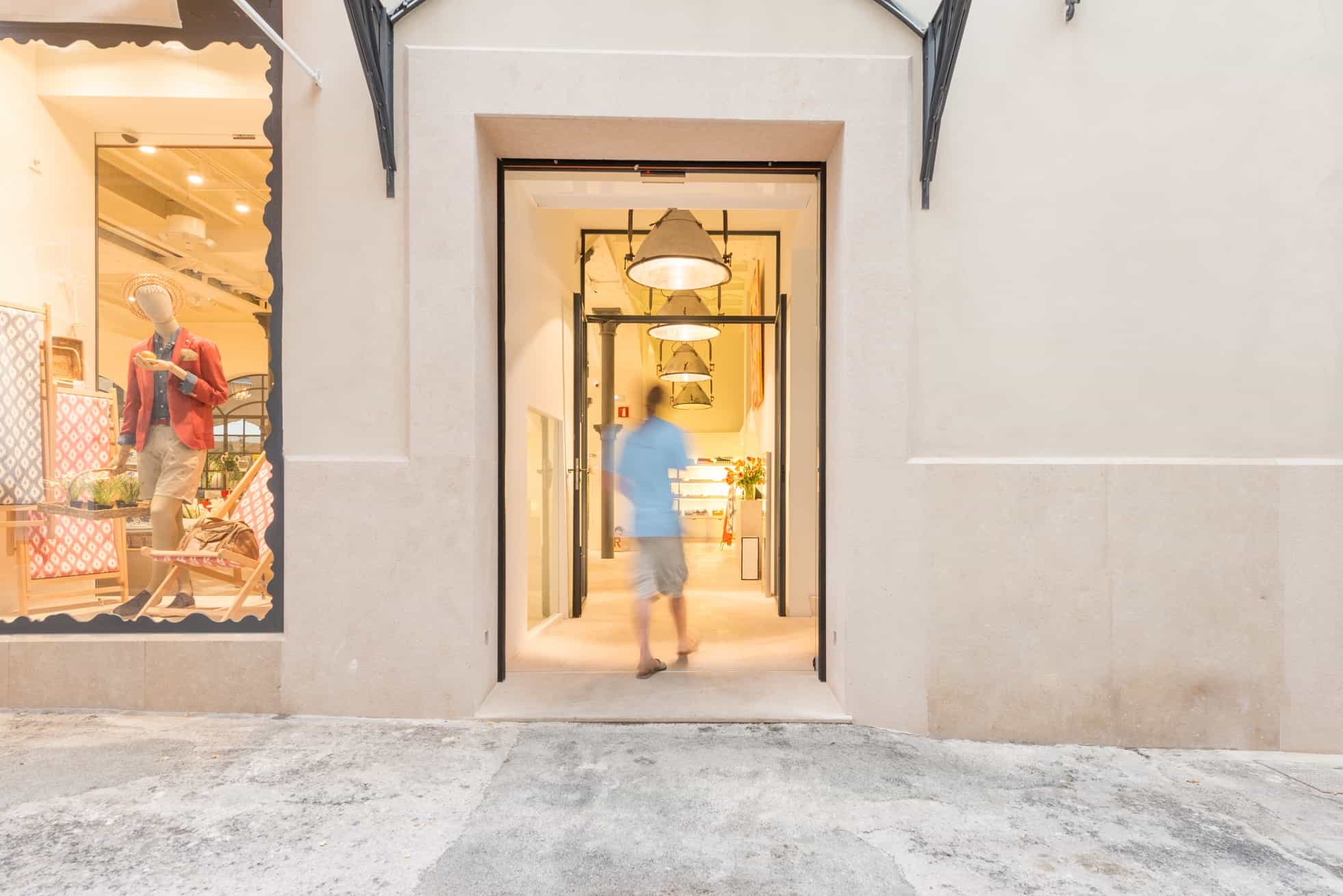
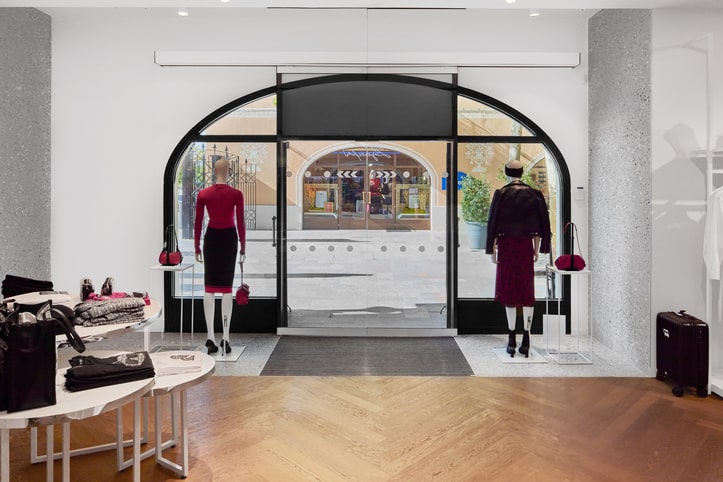
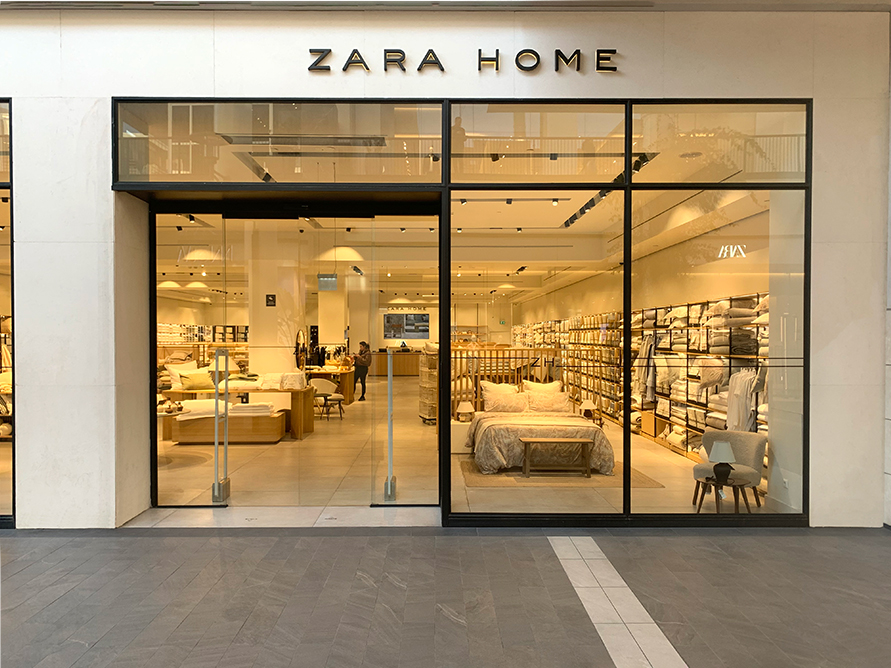
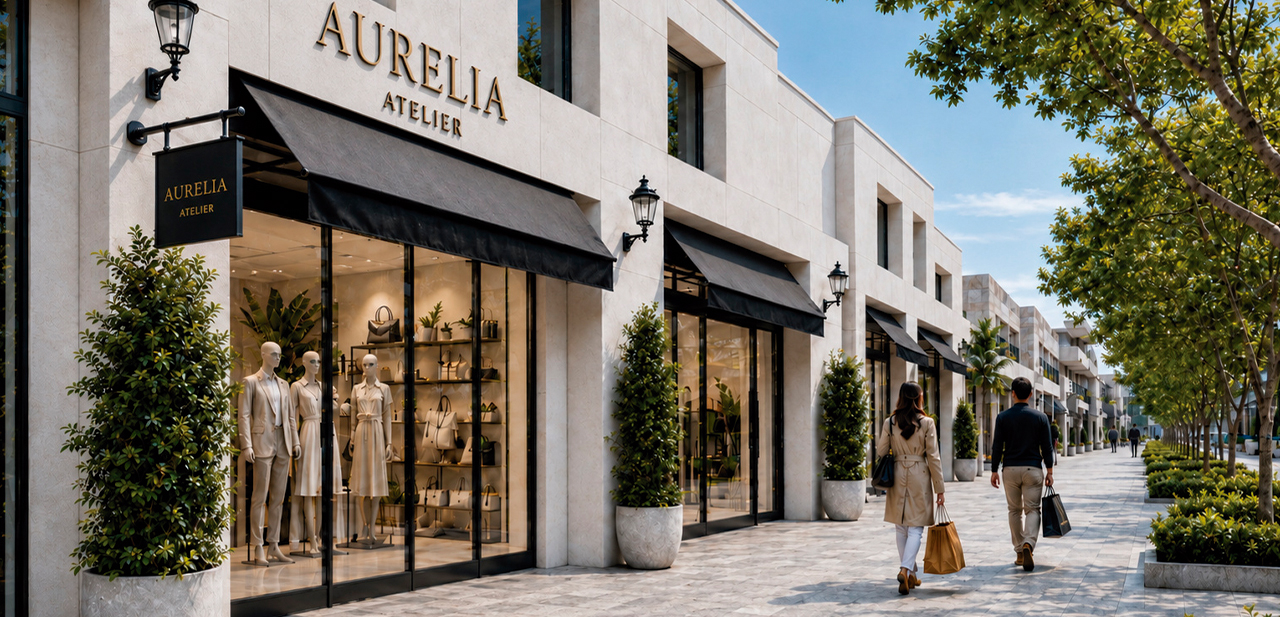
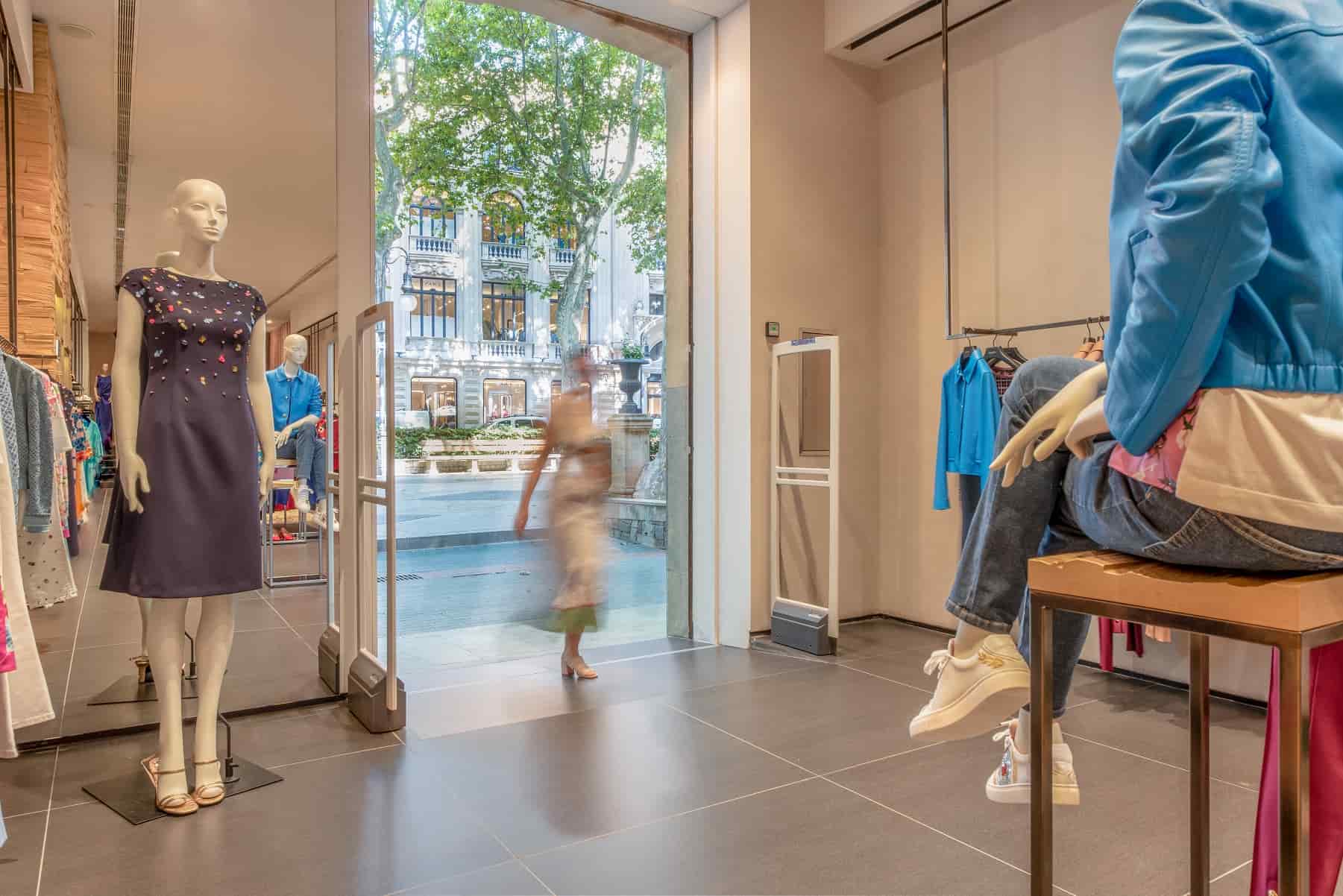
Automatic doors for shops and businesses must address needs that extend beyond opening and closing an entrance. Accessibility, customer flow, security, evacuation, energy efficiency, and the image of the establishment are all part of the selection process.
Not all businesses work the same way. A perfume shop, a jewellery shop, a café, or a supermarket each has different flows, schedules, and operational needs. Therefore, the type of door must be defined based on the width of the opening space, the expected footfall, the use of space and the features required by the project.
A standard automatic sliding door can respond to entrances with medium or high traffic. A telescopic door can maximise the passage area when the opening space is reduced. Other models are specifically designed for evacuation in case of emergency, protection against intrusions or sectorization against fire. In supermarkets, high-speed doors can also facilitate the separation between the shopping area and the warehouse.
The Complete Guide of Automatic Doors provides an overview of the main types and their functionalities. In this article, we focus exclusively on the needs of shops and commercial premises.
Which automatic door is the best choice for a shop?
There is no single automatic door suitable for all shops. The choice depends on the width of the opening space, the customer flow, accessibility, the intended use and the security or sectorization requirements.
A standard sliding door responds well to medium or high traffic. A telescopic door allows for an expanded passage area in small opening spaces. An anti-panic door is intended for evacuation routes and an RC2 for shops that need to strengthen security for heritage items.
This table provides a preliminary guideline. The final choice should be made after assessing the shop space and the intended use for the door.
What problem should the entrance of a shop address?
Before choosing a door, it is important to evaluate the following factors:
The accessibility of the entrance.
The width and characteristics of the opening space.
The usual customer flow.
The moments of greater traffic.
The evacuation requirements.
The requirements of heritage security.
The air conditioning of the premises.
The customisation of the door.
The possible sectorization of interior areas.
The frequency of use and maintenance needs.
It is not about choosing the door with the most benefits, but rather selecting the model that aligns with the actual business operation.
Accessibility is the first factor.
Accessibility is not just a convenience. It is a right and an essential condition for everyone to enter and exit a shop autonomously.
The automatic opening eliminates the need to push, pull or manually operate the door. This facilitates passage for people with reduced mobility, families with strollers, customers with shopping bags, and parcel delivery professionals.
The contactless opening improves hygiene by avoiding unnecessary contact with the door. It facilitates a more fluid circulation by allowing the route to continue without interruptions.
Therefore, accessibility must be present from the project’s initial phases, along with the width of the opening space and the planned flow. It should not be incorporated as a later correction.
The impact of customer flow
A shop can maintain stable traffic or concentrate a large part of customer influx at specific times. It may also experience occasional increases during campaigns, promotions or busy commercial periods.
The door should respond to both regular use and busy times. It is not enough to consider the daily average if there are certain periods in which many people enter and exit simultaneously.
In shops and commercial premises with medium or high traffic, standard automatic sliding doors usually offer an adequate response because they facilitate a smooth passage and do not generate a sweeping area in front of or behind the door.
Doors intended for intensive use must maintain reliable operation during the busiest hours. Therefore, the analysis must take into account the frequency of use, the distribution of the influx and the characteristics of the shop.
The specific needs of campaigns such as Black Friday, Christmas or sales can be expanded in the content on how to manage the peaks of influx in shops.
The width of the opening space determines the configuration
The width of the opening space is one of the first data points assessed by the Manusa sales team. From its characteristics, it is determined which configuration is the best to obtain the necessary passage area.
Not all sliding doors require the same arrangement of the leaves. The choice should be made depending on the geometry of the opening space, the necessary opening and the intended flow.
Standard automatic sliding door
The standard automatic sliding door can be configured for central or side opening. It is suitable for entrances of shops with medium or high traffic and allows adapting the profiles, glass and finishes to the project.
Your choice does not depend solely on the influx. The width of the opening, the distribution of the entrance and the accessibility needs should also be considered.
You can learn more about its operation and configurations in the guide on automatic sliding doors.
Automatic telescopic sliding door
When the opening space is narrow, and the passage area needs to be maximised, an automatic telescopic sliding door should be considered.
Its leaves move in a synchronised way and progressively overlap, making it possible to take better advantage of the space and obtain a wider opening than with certain standard configurations.
The telescopic door is a good choice when the dimensions of the opening space and the required passage width require a configuration that makes better use of the available space. It is also an option when the characteristics of the space and the necessary passage area require this configuration.
Evacuation and safety of people
When an entrance is part of an evacuation route, a door specifically designed for that purpose must be chosen.
The automatic anti-panic sliding door combines the usual operation of a sliding door with the possibility of folding the leaves by manually pushing them outwards in case of emergency. This allows the passage area to be expanded during evacuation.
The general safety criteria for automatic pedestrian doors are defined in the EN 16005 regulation.
Heritage security in shops
Certain spaces require greater protection against theft or intrusion attempts. This need is particularly relevant in jewellery shops, businesses with high-value items or vulnerable entrances.
The RC2 automatic sliding anti-theft door incorporates specific protection elements, such as anti-prying reinforcements, a multi-point motorised lock and reinforced side edges.
This model has been tested according to the resistance class RC2 of the UNE-EN 1627:2021. Its configuration allows for reinforcing the patrimonial security without adding an independent shutter-type closure.
The selection must meet the level of protection required by the project. Not all shops need an RC2 door, just as a standard door should not be presented as equivalent to a door designed against intrusion.
Sectorization and fire protection
A business can include areas with different functions that need to be separated. In these cases, a door designed for the sectorization required by the project should be chosen.
The EI automatic fire-resistant sliding door combines the operation of a sliding door with specific fire-fighting features. It is used to separate zones and help prevent the spread of fire and smoke during the time corresponding to its classification.
This feature is not incorporated in a generic way into any door. A tested and certified model must be chosen for that specific function.
How to separate the shop and the warehouse in a supermarket
In supermarkets and shops with an internal merchandise operation, it may be necessary to separate the shopping area from the warehouse. In this context, the priority is internal sectorization and the workflow.
The self-repairing high-speed door for supermarkets separates work areas and maintains a functional circulation of people and goods. Its high-speed opening and closing help to organise internal flows without interrupting daily operations.
Its self-repair mechanism allows the curtains to be re-inserted into the guides after certain impacts, leaving the door operational again. It also allows customisation in the colour of the curtain or with images and logos.
This application is especially relevant in supermarkets. It should not be automatically transferred to any small business, since many spaces do not have a warehouse area with this type of circulation.
When fire protection is also required
When the project needs to combine a high-speed door with a fire protection solution, a self-repairing high-speed door with fire curtain EI120 should be considered.
This model integrates in a single structure the high-speed door and the fire curtain. In this way, it responds both to the usual operations and to the needs of sectorization in the case of fire.
In addition, by incorporating a vertical closing fire curtain, it makes better use of the available space on both sides of the access – an especially interesting aspect in installations where every useful meter is important. Also, by not requiring irrigation systems to ensure its fireproof function, it simplifies installation and maintenance of the solution.
Energy efficiency and air conditioning
Automatic doors can contribute to maintaining the air conditioning of the premises because they open when necessary and close once the passage area is free again.
This operation helps to avoid unnecessarily prolonged openings and to limit the exchange of air between indoors and outdoors. As a result, it can lead to more efficient operation of HVAC equipment and more stable indoor conditions.
La eficiencia energética no depende únicamente de la velocidad de apertura. También influyen:
Energy efficiency does not depend solely on the opening speed, but also on:
the profiles.
customer flow.
the characteristics of the building.
The benefit in terms of control of openings, maintenance of air conditioning and energy consumption of the shop should be considered.
Customising and identity of the business
The door is part of the image of the business. However, customising it does not mean choosing an unusual typology solely for its visual effect.
In shops, the main customisation options include:
The colours and finishes of the frames.
The vinylation of the glass.
The composition of the leaves.
The level of transparency.
The adaptation to the visual identity of the shop.
A profile with a greater presence can visually reinforce the entrance. The configurations with bare or transparent frames offer a larger glazed surface and facilitate the visibility of the interior.
Glass can also be used as a support for graphic elements, signage or brand messages. The personalisation must respond to the design of the shop without compromising accessibility, security or the operation of the door.
Technical advice defines the right door.
The user does not have to measure, check or determine on his own which door they need.
Manusa’s commercial and technical team studies the space and analyses:
The width and characteristics of the opening space.
The usual flow and the times of greatest traffic.
Accessibility needs.
The indoor or outdoor location.
The evacuation requirements.
The heritage security.
The sectorization of business.
The customisation options.
The frequency of use and maintenance needs.
Based on these variables, it recommends the model and configuration that best suits the project.
It is also advisable to provide for the maintenance of the door from the beginning. Regular check-ups allow to keep the sensors, operator and safety devices functioning. You can learn more about this topic in the article on automatic door maintenance.
A door for the actual business operation
Automatic doors for shops and businesses should facilitate accessible passage, respond to the customer flow and adapt to the actual operation.
The standard sliding door can solve entrances with medium or high traffic. The telescopic door allows for maximising the passage area in small opening spaces. The anti-panic, RC2 or fire-resistant doors respond to specific uses. In supermarkets, fast doors can facilitate the sectorization between the shopping area and the warehouse.
The best choice is not the door with the most features, but the model that meets the specific needs of the business.
Once these variables have been evaluated, you can read the Manusa automatic doors for shops page and find out the available configurations.
If this summer you want to improve the comfort of your premises or office, save energy and offer a better experience to your customers, find out how we can help you with the most suitable solution.
Contact us