Andorra
 Austria
 Belgium
 Bosnia and Herzegovina
 Bulgaria
 Cyprus
 Czech Republic
 Denmark
 Deutschland
 France
 Greece
 Hungary
 Ireland
 Iceland
 Israel
 Italy
Italy
 Latvia
 Luxembourg
 Malta
Malta
 Montenegro
 Netherlands
 Norway
 Poland
 Portugal
 Romania
 Serbia
 Slovakia
 Slovenia
 Spain
Spain
 Sweden
 Switzerland
 Turkey
 Ukraine
 United Kingdom
 Argentina
 Bolivia
 Brasil
 Canada
 Chile
Chile
 Colombia
 Costa Rica
 Cuba
Cuba
 República Dominicana
 Ecuador
 El Salvador
 French Guiana
 Guatemala
 Honduras
 México
 Nicaragua
 Panamá
 Paraguay
 Perú
Perú
 Uruguay
 United States
 Venezuela
 Azerbaijan
 China
China
 Hong Kong
 India
India
 Indonesia
 Iraq
Iraq
 Japan
Japan
 Jordan
 Kuwait
 Lebanon
 Malaysia
 Maurice
 Myanmar
 Oman
Oman
 Pakistan
 Philippines
 Qatar
Qatar
 Russia
 Saudi Arabia
 Singapore
 South Korea
 Syria
Syria
 Thailand
 United Arab Emirates
 Vietnam
 Algeria
 Angola
 Egypt
Egypt
 Ghana
Ghana
 Kenya
Kenya
 Libya
Libya
 Morocco
 Nigeria
 Sénégal
 South Africa
 Tanzania
 Tunisie
 Australia
 New Zealand

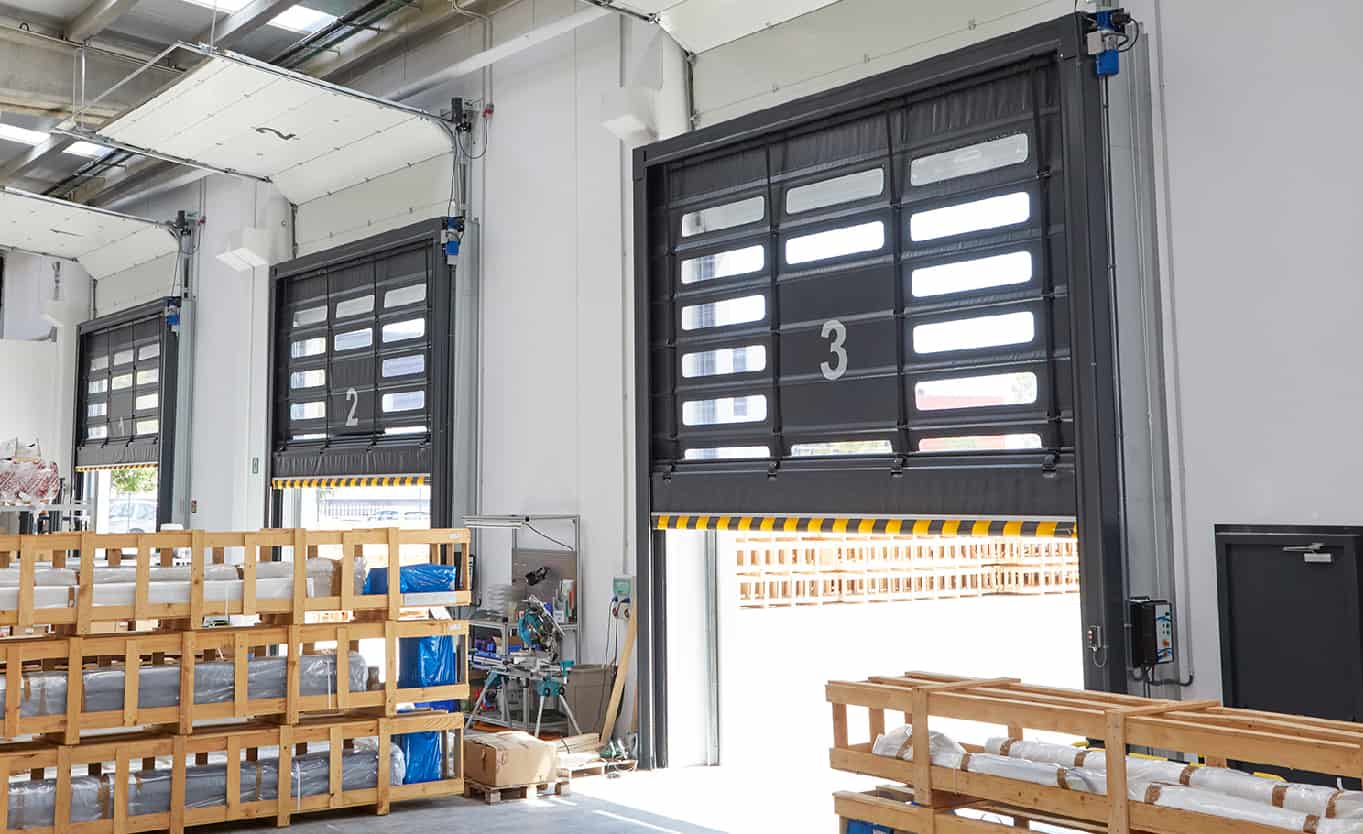
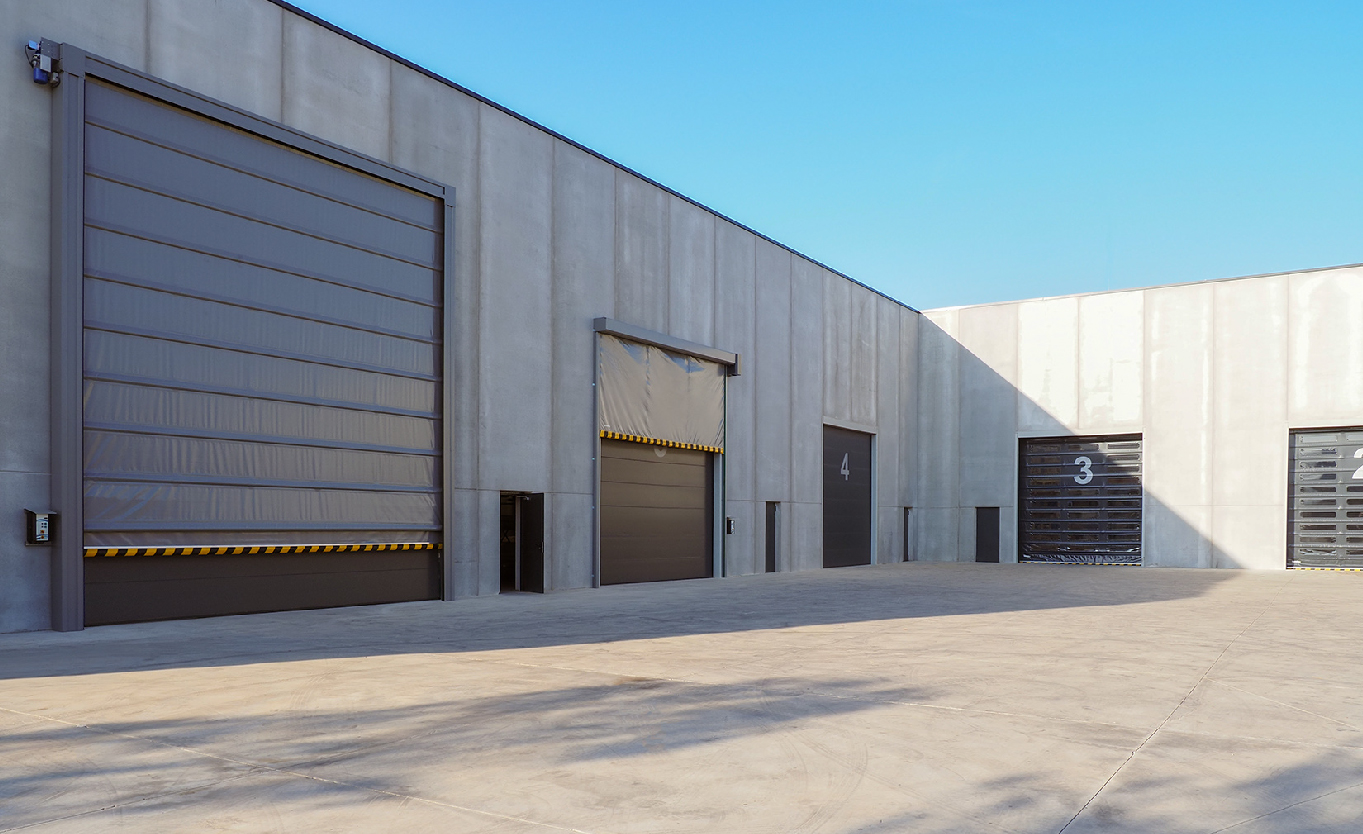
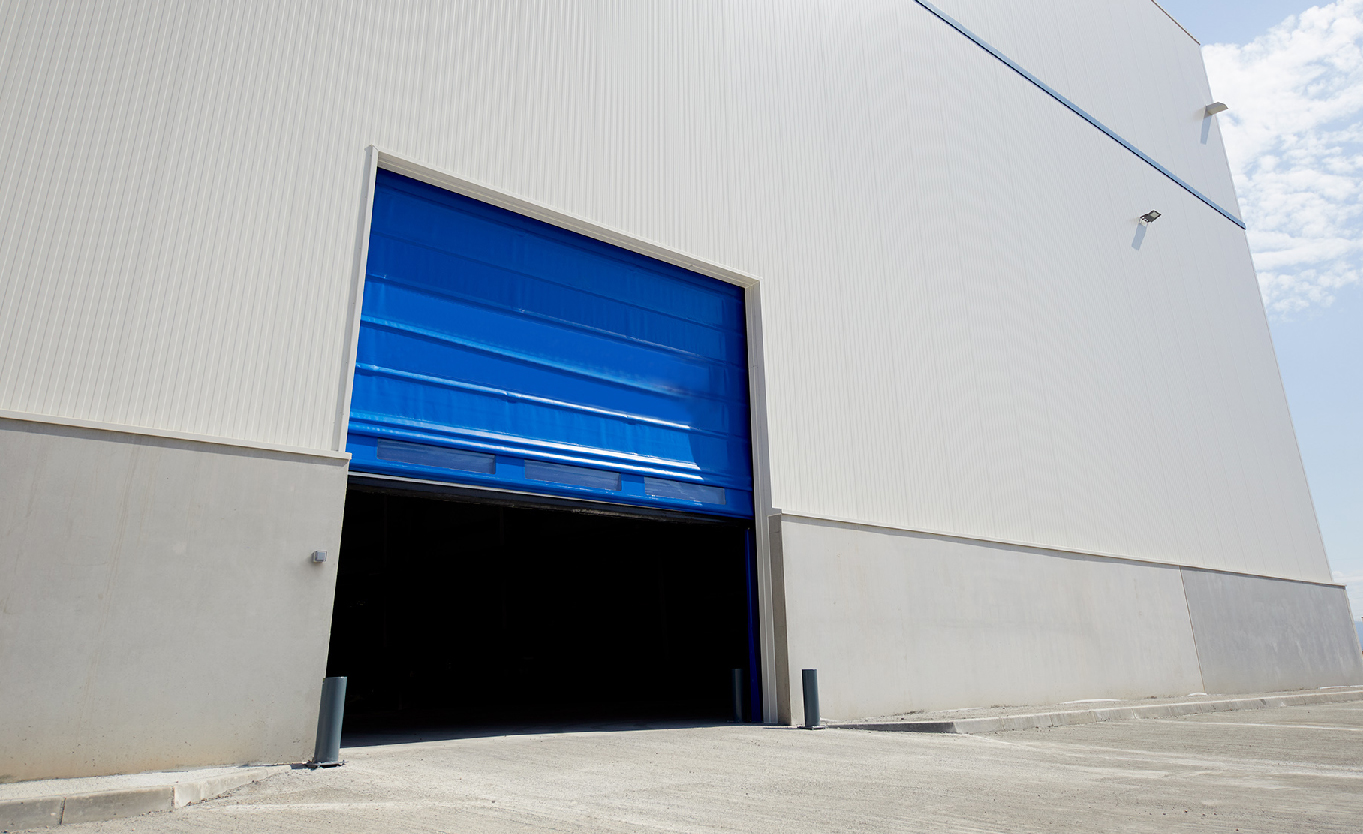
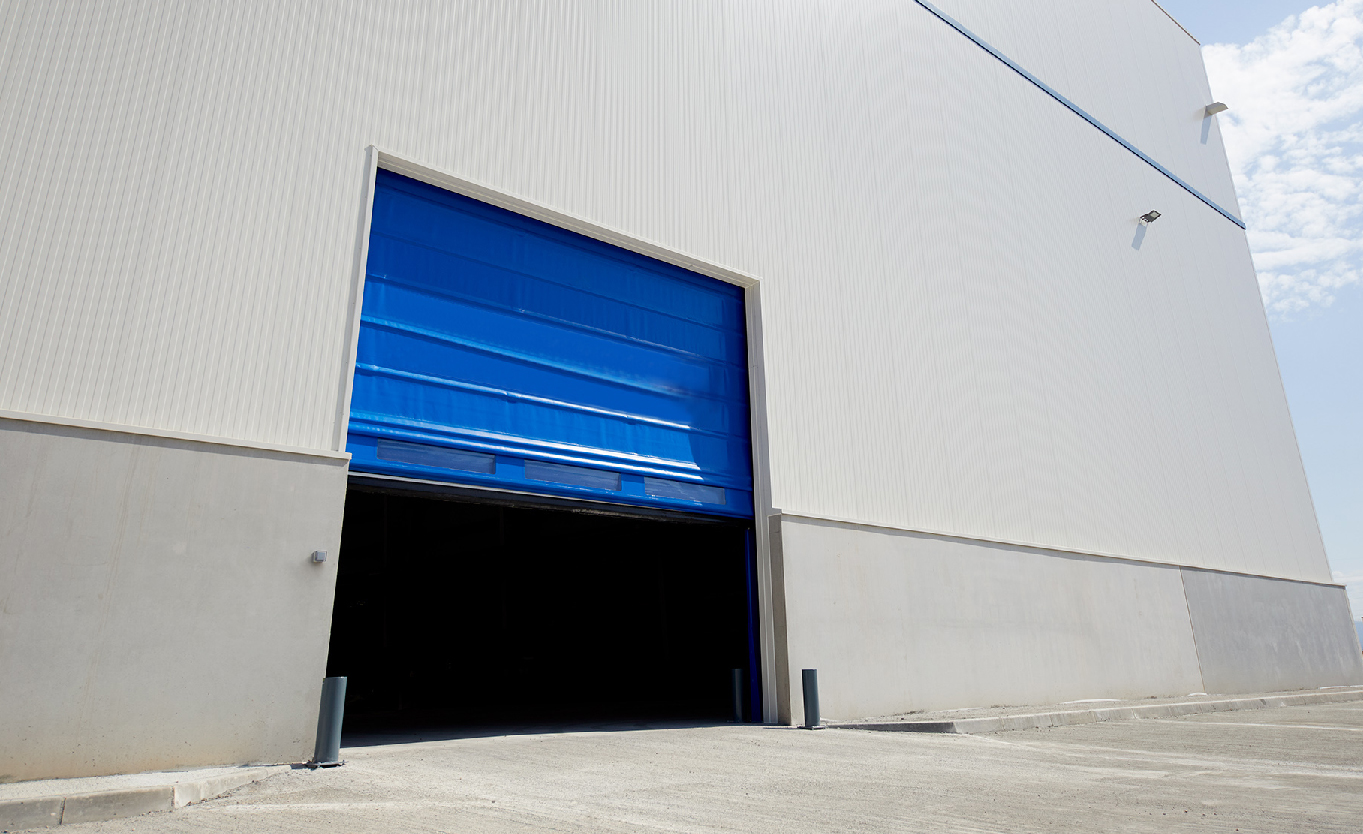
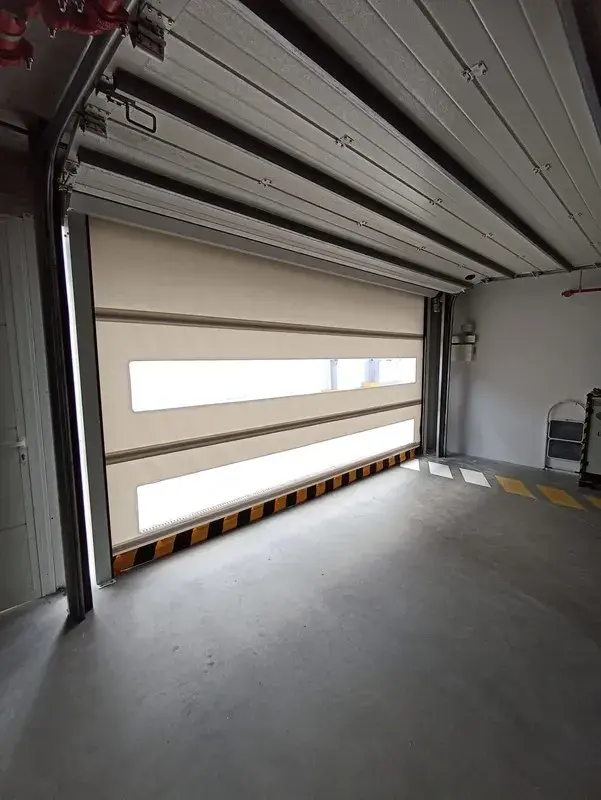
A high-speed stackable door is an industrial door that opens vertically and is made from a flexible tarpaulin. As it opens, the door rises and stacks gradually on top of itself. Its transverse reinforcements provide added rigidity, making it suitable for large industrial opening spaces and locations exposed to wind.
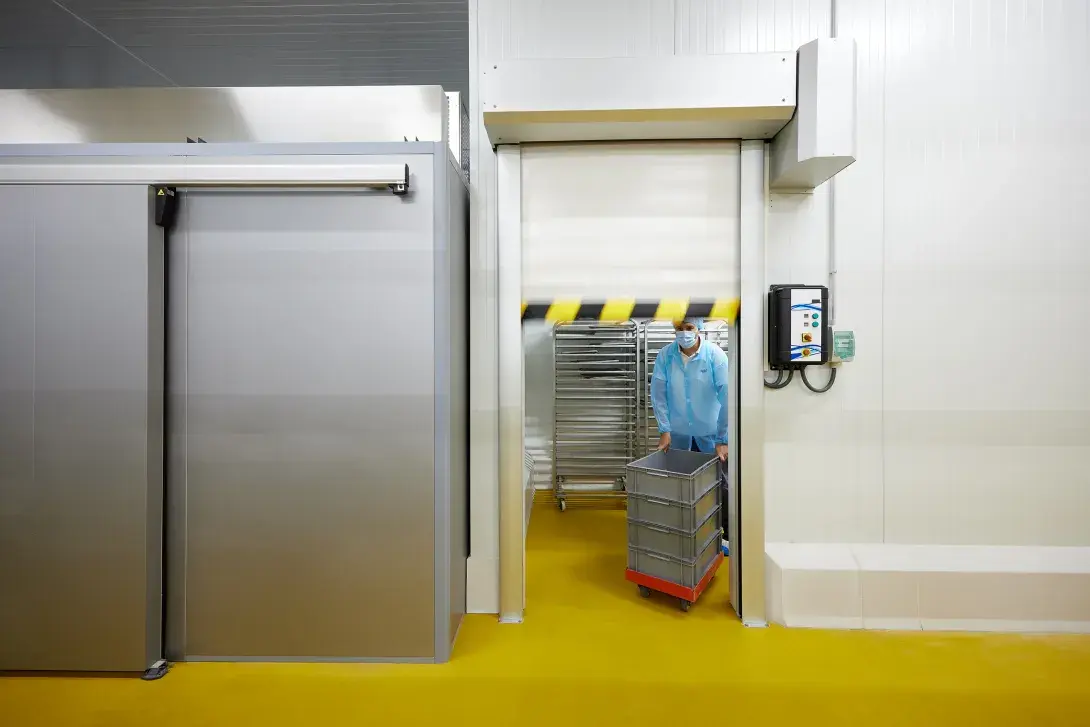
This design is particularly suitable for outdoor industrial enclosures, such as warehouses, logistics centres, or food industry facilities, where there is frequent circulation of vehicles, machinery or goods.
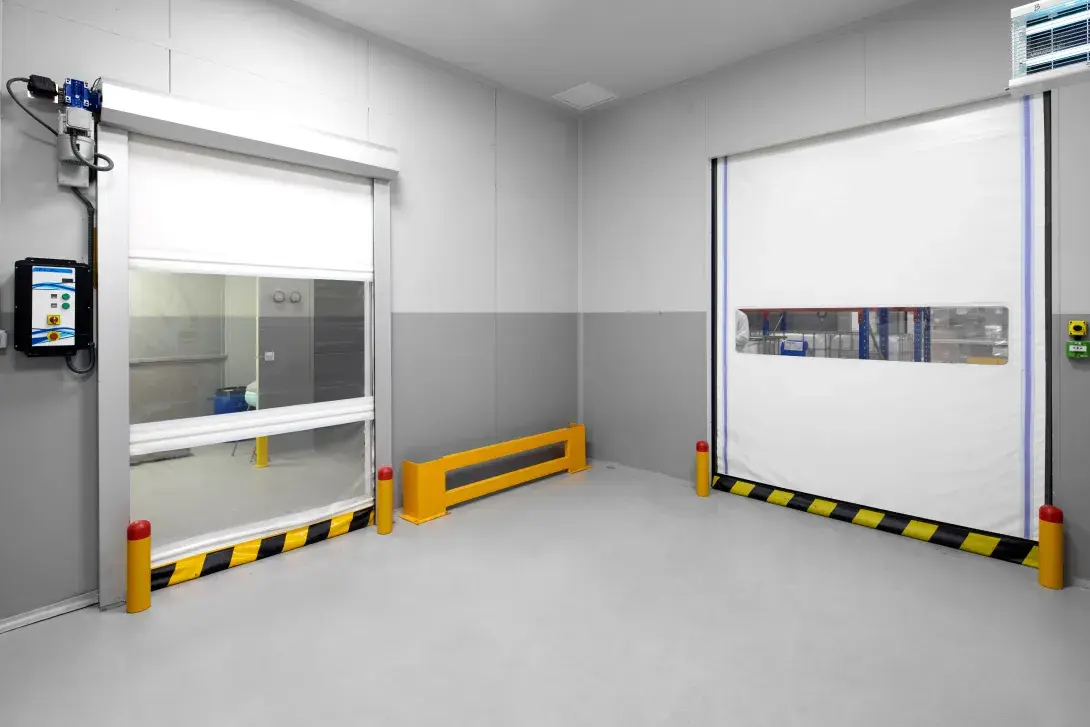
In addition to facilitating transit, a high-speed stackable door can help sectorize different work areas and limit air exchange between spaces through opening and closing cycles adapted to the operation.
Manusa's high-speed stackable doors have different configurations to meet the requirements of the characteristics of the opening space, the conditions of use and the wind load expected in the location.
A high-speed stackable door combines vertical opening, cross reinforcements, and wind resistance, making it suitable for large industrial opening spaces, especially in outdoor settings.
What is a high-speed stackable door?
The defining characteristic of this typology is the movement of the tarpaulin during opening.
The door consists of two lateral guides between which a flexible curtain, reinforced with cross bars, moves. When the door opens, some straps lift the curtain, allowing it to stack gradually on top.
The movement of the door is carried out by a system that includes pulleys, a drum and a motor-reducer, enabling automatic raising and lowering.
This operation has three key characteristics that are particularly relevant in industrial environments:
Vertical opening, doesn’t need lateral movement.
Structural strength, thanks to the cross reinforcements.
Frequent operation, suitable for areas with regular traffic from vehicles, goods or machinery.
The choice must always consider the specific characteristics of the hole, its location and the conditions of use.
How does a high-speed stackable door work?
The opening cycle can be initiated by various activation devices. Depending on the requirements of the project, pushbuttons, radars, photocells, ceiling handles, magnetic floor detectors or radio control systems can be used.
Once the signal has been received, the motor-reducer actuates the mechanism that lifts the tarpaulin. The straps allow it to be gradually raised and stacked in the upper section of the door.
During the closing process, the reverse movement takes place: the canvas descends between the lateral guides until the cycle is complete.
In the Manusa standard high-speed stackable door, the opening speed is 0.8 m/s. This speed makes it possible to speed up the usual movements in industrial and logistics areas while maintaining the typical structural configuration of this typology.
The activation device should be selected depending on who uses the door, the types of vehicles or machinery passing through, and the frequency of use.
Standard high-speed stackable door
● Opening speed: 0.8 m/s.
● Usage: indoor and outdoor.
● Wind resistance: Class 2 is specified in the configurations for the product.
● Structure: lacquered steel.
● Designed for intensive use and large industrial opening spaces.
When the wind load is higher, it is important to consider a specially reinforced configuration.
Why are cross reinforcements important?
The crossbars are one of the key elements of a high-speed stackable door.
These crossbars, placed along the tarpaulin, provide rigidity to withstand wind loads. This feature becomes particularly important when the door is installed as part of the exterior enclosure of a warehouse.
The reinforcements enable the door to withstand more demanding conditions, making it suitable for large opening spaces where external exposure is a significant factor to be taken into account.
Therefore, the selection of the door must consider the characteristics of the opening space as well as its orientation, location, and exposure to the wind.
Advantages of a high-speed stackable door
The characteristics of this typology respond to the usual needs of specific industrial locations.
Among its main advantages are:
Adaptation to large opening spaces, especially in industrial enclosures.
Wind resistance, due to reinforcements integrated into the fabric.
Frequent opening and closing, suitable for areas with regular transit.
Sectorization of areas, helping to separate spaces with different uses.
Vertical opening, eliminates the need for lateral movement.
Configuration is tailored to the project, both in features and in finishing options.
These advantages do not mean that a stackable door is always the right solution. The choice should be based on the specific conditions of each installation.
When to install a high-speed stackable door?
A high-speed stackable door should be considered in the following situations:
A large exterior opening space.
Exposure to wind.
Frequent circulation of industrial vehicles, machinery or goods.
Need to separate different work areas.
Need to limit air exchange between zones.
An operation with frequent openings and closures.
Its use is common in various sectors, including industry, logistics and the food industry. However, the sector alone does not determine which door should be installed.
Different types of doors may be necessary within the same building, depending on the location of the opening space, the volume of traffic and the exposure conditions.
Therefore, the decision-making process should start by assessing the actual conditions of the installation and its intended use.
Which high-speed door does your facility need?
We assess the opening space, the workflows and the exposure conditions to determine the suitable industrial door for each project.
Standard stackable or wind-resistant door
The Manusa range includes configurations specifically designed for various exposure levels.
Standard high-speed stackable door
The standard high-speed stackable door is designed for intensive use and large openings, particularly suitable for outdoor areas.
The reinforcements included in the tarpaulin provide wind resistance, making it suitable for use as an enclosure in various industrial settings.
It can be installed both indoors and outdoors, and it has a Class 2 wind resistance rating in the configurations established for the product.
Wind-resistant high-speed stackable door
When the site experiences higher wind loads, it may be necessary to resort to a specifically reinforced configuration.
The wind-resistant high-speed stackable door is designed for outdoor enclosures where wind conditions are especially demanding.
Depending on the configuration, this door can achieve either Class 3 or Class 5 wind resistance, while maintaining an opening speed of 0.8 m/s.
The choice is not to automatically select the version with the highest resistance. It must be based on the wind load and the performance requirements of the project.
High-speed stackable or roll-up door: what is the difference?
High-speed stackable and roll-up doors both open vertically, but the movement of the tarpaulin differs.
The crossbars of the stackable door provide added rigidity, making it particularly suitable for large exterior enclosures and situations where wind resistance is crucial.
A typology should not be selected only based on its opening mechanism. The technical team must assess both the conditions of the gap and the operational requirements before deciding which fast door is most suitable for the project.
You can explore the various typologies in the Complete Guide of industrial doors.
Sectorization and internal conditions
A high-speed stackable door can also help to separate different work areas within an industrial facility.
Unnecessarily prolonged openings increase the air exchange between zones. A door adapted to the frequency of passage makes it possible to limit this air exchange and help maintain the specific conditions required for each space.
This can be especially relevant in settings where there are areas with different air conditioning or climate control needs.
The effectiveness of the door depends on factors such as its location, the frequency of opening and the characteristics of the building. Therefore, it should be considered as a part of the overall sectorization of the installation.
Safety during opening and closing
The automatic movement of an industrial door must incorporate mechanisms designed to detect obstacles and respond to certain situations during its operation.
In Manusa's high-speed stackable doors, a safety photocell located in the guide can detect an obstacle and reverse the movement, causing the reopening.
The lower part of the tarpaulin can also incorporate a safety strap that, upon contact, reverses the direction of movement.
Another possible configuration is a photocell barrier, which allows detection to be performed during the door operation.
The door allows its manual lifting in case of power failure, according to the intended configuration.
These devices are part of the door’s safe operation and must be kept in proper condition throughout its entire service life.
What regulations should a high-speed stackable door comply with?
High-speed stackable doors are subject to the product standard EN 13241, applicable to industrial, commercial, garage doors and gates.
Manusa doors include the documentation corresponding to the product, including:
User manual.
Declaration of Benefits.
CE marking.
Maintenance book.
The regulations must be taken into account from the selection of the door to its installation, use and maintenance.
You can explore this information in the guide on EN 13241 regulations for industrial doors.
Customisation according to the project requirements
A high-speed stackable door can include different configuration and finishing options.
The structure is made of lacquered steel, and the tarpaulin can be customised, according to the available options, with different colours, graphic elements or logos.
Transparent windows can also be included, providing visibility between both sides of the door without having to open it.
Customisation does not respond only to visual criteria. The need for visibility, the location and the operation of the space should also be taken into account when defining the configuration.
What should be considered before selecting a stackable door?
The user does not need to define on their own which configuration to install.
The commercial and technical teams must analyse various factors such as:
The location of the opening space.
Its indoor or outdoor exposure.
The expected wind load.
The flow of vehicles, machinery, people or goods.
The frequency of opening and closing.
The needs of sectorization.
The appropriate activation devices.
The safety requirements.
The necessary customisation options.
With this information, it can be determined whether a high-speed stackable door meets the needs of the project and what configuration and resistance level are appropriate.
Wind-resistant high-speed stackable door
For exterior enclosures subject to particularly high wind loads, the reinforced configuration increases the door's resistance and allows it to respond to more demanding industrial settings.
Installation and maintenance during the service life
A high-speed stackable door must be installed and operate according to the characteristics defined for the project.
During operation, it is necessary to correctly configure the movement, activation devices and safety mechanisms.
Subsequently, maintenance allows inspection of elements such as:
The lifting mechanism.
The guides.
The detection devices.
The safety straps or barriers.
The activation systems.
The motor-reducer.
The maintenance book is part of the door documentation and allows you to keep a record of the inspections and interventions carried out during its service life.
A door for large opening spaces and demanding conditions
The high-speed stackable door features a flexible tarpaulin that is lifted vertically and stacked gradually on top. The cross reinforcements provide rigidity to the structure, enabling it to withstand wind exposure.
This combination makes it a particularly suitable solution for large outdoor areas in industrial facilities where frequent use, circulation of vehicles or goods and demanding environmental conditions coexist.
In cases of increased wind load, it may be necessary to implement a specifically reinforced configuration.
The selection process is not solely based on the size of the opening space. The location, wind load, flow, opening frequency and sectorization needs should also be considered.
Based on these criteria, the technical team can identify the high-speed stackable door configuration that best meets the project’s requirements.
Documentation
 Catalogue of industrial doors Manusa
If this summer you want to improve the comfort of your premises or office, save energy and offer a better experience to your customers, find out how we can help you with the most suitable solution.
Contact us
Related products