Andorra
 Austria
 Belgium
 Bosnia and Herzegovina
 Bulgaria
 Cyprus
 Czech Republic
 Denmark
 Deutschland
 France
 Greece
 Hungary
 Ireland
 Iceland
 Israel
 Italy
Italy
 Latvia
 Luxembourg
 Malta
Malta
 Montenegro
 Netherlands
 Norway
 Poland
 Portugal
 Romania
 Serbia
 Slovakia
 Slovenia
 Spain
Spain
 Sweden
 Switzerland
 Turkey
 Ukraine
 United Kingdom
 Argentina
 Bolivia
 Brasil
 Canada
 Chile
Chile
 Colombia
 Costa Rica
 Cuba
Cuba
 República Dominicana
 Ecuador
 El Salvador
 French Guiana
 Guatemala
 Honduras
 México
 Nicaragua
 Panamá
 Paraguay
 Perú
Perú
 Uruguay
 United States
 Venezuela
 Azerbaijan
 China
China
 Hong Kong
 India
India
 Indonesia
 Iraq
Iraq
 Japan
Japan
 Jordan
 Kuwait
 Lebanon
 Malaysia
 Maurice
 Myanmar
 Oman
Oman
 Pakistan
 Philippines
 Qatar
Qatar
 Russia
 Saudi Arabia
 Singapore
 South Korea
 Syria
Syria
 Thailand
 United Arab Emirates
 Vietnam
 Algeria
 Angola
 Egypt
Egypt
 Ghana
Ghana
 Kenya
Kenya
 Libya
Libya
 Morocco
 Nigeria
 Sénégal
 South Africa
 Tanzania
 Tunisie
 Australia
 New Zealand

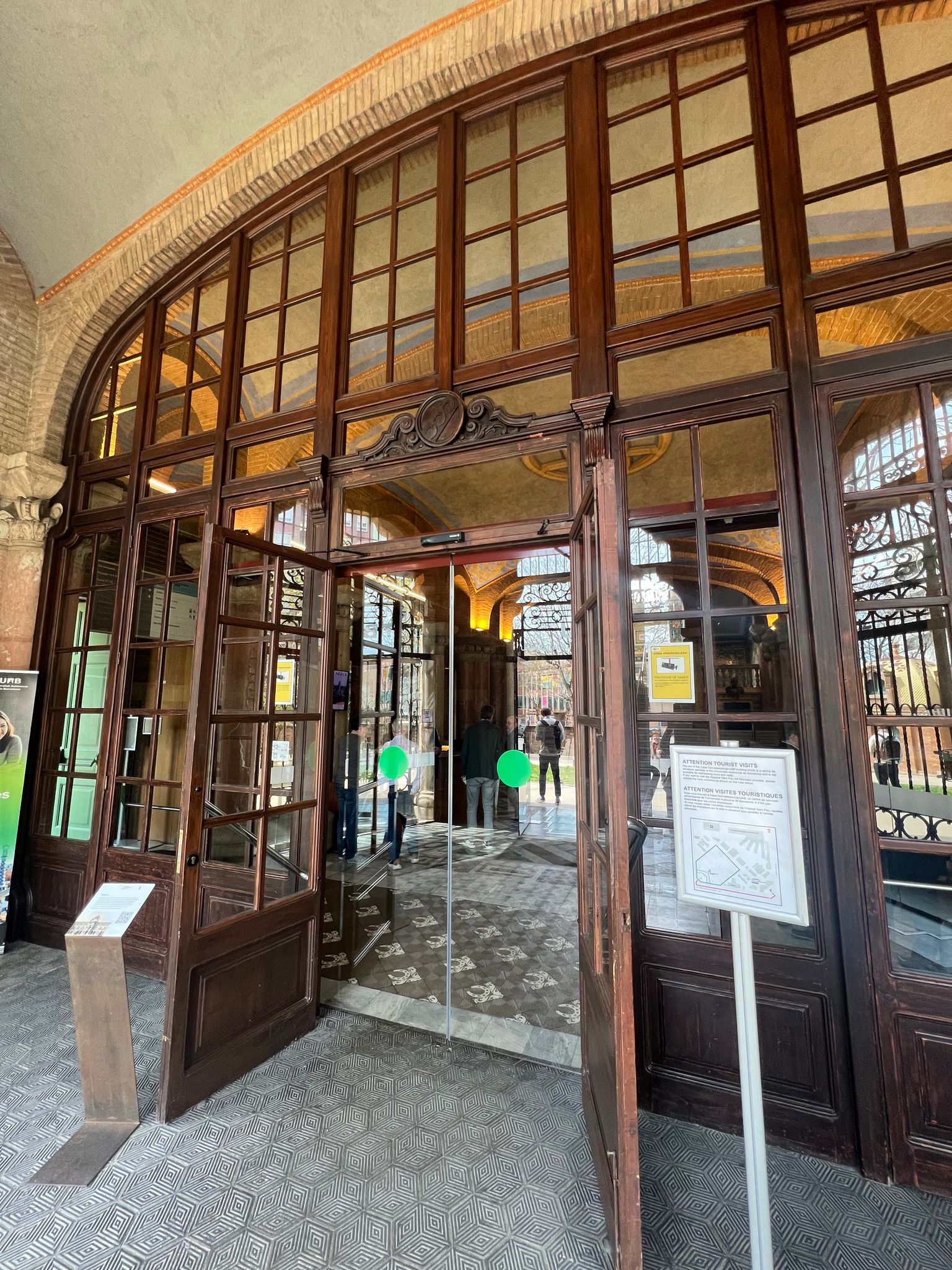
The adaptation of modern technologies to spaces of significant heritage value represents one of the most complex challenges to contemporary architecture. The work done at Casa de la Convalescència de Barcelona is a perfect example of this balance: a building classified as a Historic-Artistic Monument and a UNESCO World Heritage Site, which currently houses the headquarters of the Fundació Universitat Autònoma de Barcelona (UAB). To transform this historic setting into a functional academic centre, Manusa was involved in the modernisation of its main entrances by installing automatic sliding doors.
An installation that respects the original architecture
The Casa de la Convalescència forms part of the Modernist complex of the Hospital de la Santa Creu i Sant Pau. It was designed by the architect Lluís Domènech i Montaner and completed in 1930 under the supervision of his son, Pere Domènech i Roura.
The renovation of its main entrance presented the challenge of working on a historic building without altering the value of this masterpiece of Catalan Modernism.
The project resolves the access issue through a technical solution that respects the original architecture. The existing large wooden door remains open, allowing a view of the building’s interior, whilst functional access is provided through a standard automatic sliding door.
This combination allows the historical aesthetic to be preserved without compromising the functionality of the current systems. Thanks to the use of fully transparent glass leaves, the automatic door blends in seamlessly and maintains the visual continuity of the lobby.
Benefits of automatic doors in historic buildings
The installation of a centre-opening automatic sliding door in a setting such as the Casa de la Convalescència offers key benefits for both the building and its users:
-
Universal accessibility: removes architectural barriers in a high-traffic building, facilitating the smooth flow of students, visitors and teaching staff without the need for manual contact.
-
Energy efficiency: due to its opening and closing speed, the door minimises the air exchange with the exterior of the building, helping to maintain the indoor climate and reduce the building’s energy consumption.
-
Safety and people flow management: ensures orderly flow in high-traffic areas, adapting to the number of people entering the lobby. It also includes an obstacle detection system with automatic reopening.
-
Aesthetic integration: the profiles and the transparent leaves allow for seamless architectural integration, in harmony with the building’s original materials (wood, stone and ceramics).
Solutions for iconic settings
With this project, Manusa reaffirms its ability to work in settings with the highest heritage standards, providing solutions that protect the past whilst looking towards the future.
Another recent example is the project carried out at the Museu Marítim de Mallorca, situated at the foot of the cathedral and next to the Parc del Mar. We refurbished the entrances with automatic doors tailored for this 18th-century architectural complex in order to enhance the visitor experience.
Are you looking for an automatic door solution for a project in a historic building? Contact our team of experts, and we will provide you with personalised advice to find the best option for your entrances.
We analyze your needs and define the most suitable solution for your case.
Request advice and a quote